DESCRIPTION
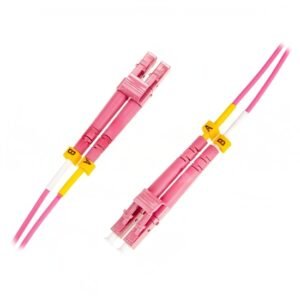
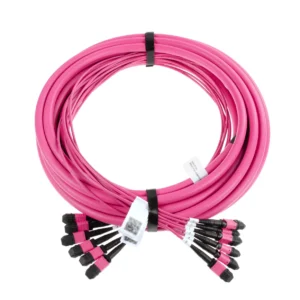
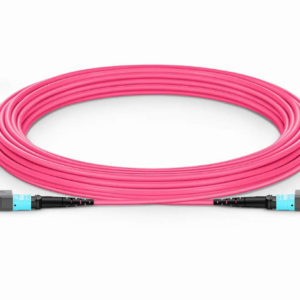
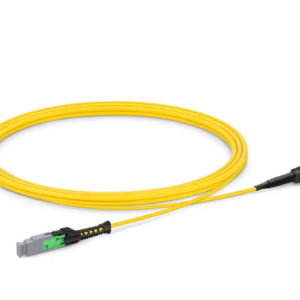
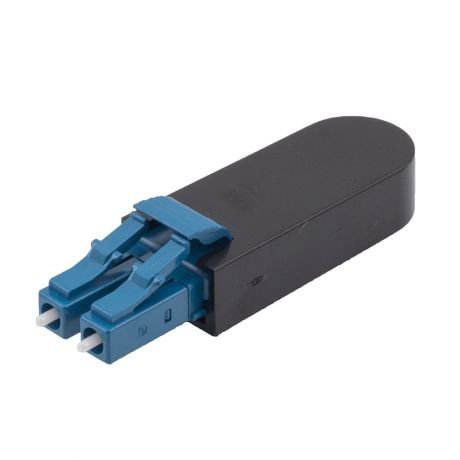
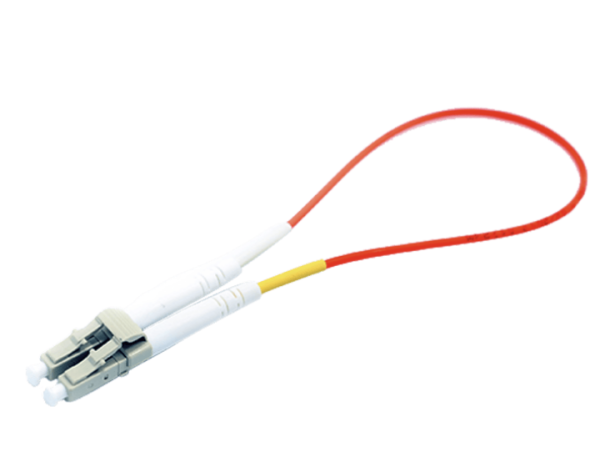
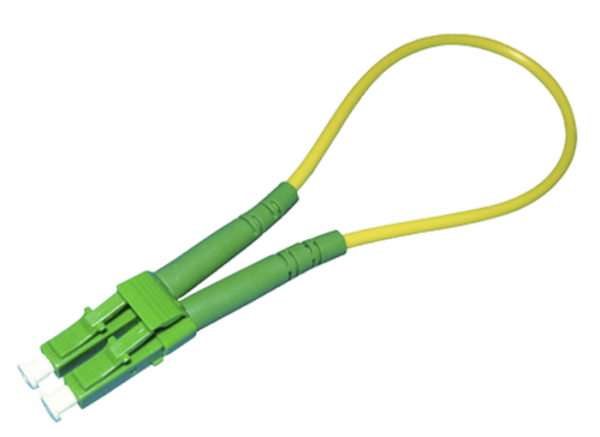
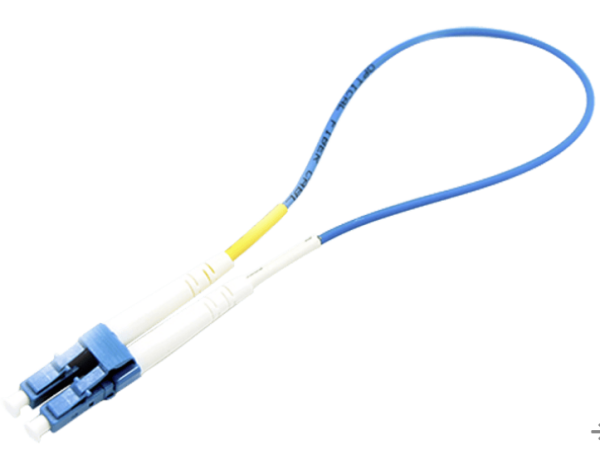
The LC Fiber Optic Loopback Module and Cable are compact, cost-effective tools designed for equipment testing, diagnostics, and maintenance. Available in both module and cable formats, these loopbacks are essential for simulating signal transmission and evaluating the performance of optical transceivers and other network devices.

- Flexible Configuration:
- Available in single-mode and multi-mode versions.
- Choose between LC/UPC and LC/APC connectors to suit your testing needs.
- High Performance:
- Low insertion loss ensures accurate signal simulation.
- High return loss reduces signal reflections for better diagnostics.
- Ease of Use:
- Compact design enables easy handling and deployment in dense network setups.
- Durable build for extended usability and repeat testing.
- Compatibility:
- Supports a wide range of transceivers and network environments.

| Item | Specification |
|---|---|
| Product Type | Fiber Optic Loopback Module / Cable |
| Connector Type | LC Duplex |
| Polish Options | UPC / APC |
| Single-Mode Fiber | OS2 (9/125µm), G.657A2 |
| Multi-Mode Fiber | OM1 / OM2 / OM3 / OM4 / OM5 |
| Insertion Loss | ≤0.3 dB |
| Return Loss | UPC ≥50 dB, APC ≥60 dB |
| Repeatability | ≤0.1 dB |
| Changeability | ≤0.2 dB |
| Fiber Structure | Duplex |
| Cable Diameter Options | 0.9 mm / 2.0 mm / 3.0 mm |
| Operating Temperature | -40°C to +80°C |
| Durability | 1000 mating cycles |

- Transceiver Testing: Ideal for loopback diagnostics in high-speed networks, including 10G, 25G, 40G, 100G, and beyond.
- System Calibration: Used for verifying the performance of optical systems during assembly or installation.
- Data Center Maintenance: Helps identify potential issues in patch panels, switches, and servers.
- Production Line Testing: Essential for manufacturers during product quality assurance.
- Network Equipment Simulation: Simulates the presence of an optical network device for development and testing purposes.
Selecting the correct loopback module or cable for specific transceivers depends on several factors, including the connector type, polish type, and cable type. Below is a detailed guide tailored for commonly used transceiver modules:
Table 1: Loopback Choices for 10G SFP+ Transceivers
| Model | Interface Type | Cable Type | Suited Loopback |
| 10GBASE-USR | LC Duplex (PC) | MMF | LC/UPC Duplex Multimode Fiber Loopback |
| 10GBASE-SR | LC Duplex (UPC) | MMF | LC/UPC Duplex Multimode Fiber Loopback |
| 10GBASE-LR | LC Duplex (UPC) | SMF | LC/UPC Duplex Single-mode Fiber Loopback |
| 10GBASE-ER | LC Duplex (UPC) | SMF | LC/UPC Duplex Single-mode Fiber Loopback |
| 10GBASE-ZR | LC Duplex (PC) | SMF | LC/UPC Duplex Single-mode Fiber Loopback |
| Model | Interface Type | Cable Type | Suited Loopback |
| 40GBASE-CSR4 | MTP/MPO (UPC) | MMF | 8/12 Fibers MTP/UPC Multimode Fiber Loopback |
| 40GBASE-SR4 | MTP/MPO (UPC) | MMF | 8/12 Fibers MTP/UPC Multimode Fiber Loopback |
| 40GBASE-PLRL4 | MTP/MPO (APC) | SMF | 8/12 Fibers MTP/APC Single-mode Fiber Loopback |
| 40GBASE-PLR4 | MTP/MPO (APC) | SMF | 8/12 Fibers MTP/APC Single-mode Fiber Loopback |
| 40GBASE-LR4 | LC Duplex (PC) | SMF | LC/UPC Duplex Single-mode Fiber Loopback |
| 40GBASE-LR4L | LC Duplex (UPC) | SMF | LC/UPC Duplex Single-mode Fiber Loopback |
| 40GBASE-ER4 | LC Duplex (UPC) | SMF | LC/UPC Duplex Single-mode Fiber Loopback |
| 40GBASE-LX4 | LC Duplex (UPC) | MMF/SMF | LC/UPC Duplex Multimode/Single-mode Fiber Loopback |
Table 3: Loopback Choices for 100G QSFP28 Transceivers
| Model | Interface Type | Cable Type | Suited Loopback |
| 100GBASE-SR4 | MTP/MPO (UPC) | MMF | 8/12 Fibers MTP/UPC Multimode Fiber Loopback |
| 100GBASE-PSM4 | MTP/MPO (APC) | SMF | 8/12 Fibers MTP/APC Single-mode Fiber Loopback |
| 100GBASE-LR4 | LC Duplex (UPC) | SMF | LC/UPC Duplex Single-mode Fiber Loopback |
| Model | Interface Type | Cable Type | Suited Loopback |
| 40GBASE-SR4 CFP | MPO/MTP (UPC) | MMF | 8/12 Fibers MTP/UPC Multimode Fiber Loopback |
| 40GBASE-LR4 CFP | SC Duplex (UPC) | SMF | SC/UPC Duplex Single-mode Fiber Loopback |
| 40GBASE-FR CFP | SC Duplex (UPC) | SMF | SC/UPC Duplex Single-mode Fiber Loopback |
| 100GBASE-LR4 CFP | SC Duplex (PC/UPC) | SMF | SC/UPC Duplex Single-mode Fiber Loopback |
| 100GBASE-ER4 CFP | SC Duplex (PC/UPC) | SMF | SC/UPC Duplex Single-mode Fiber Loopback |
| 100GBASE-SR4 CFP | MPO/MTP (UPC) | MMF | 24 Fibers MTP/UPC Multimode Fiber Loopback |
For other transceivers not mentioned in this guide, you can select the appropriate loopback by checking the transceiver’s interface type, physical contact, and cable type. This ensures optimal compatibility and performance.
Q1: What is the function of an LC fiber optic loopback?
It is used for testing and diagnostics by looping the optical signal from the transmitter back into the receiver, verifying transceiver and port functionality.
Q2: What is the difference between the loopback module and the loopback cable?
The module is compact and durable for high-density testing environments, while the cable version offers more flexibility for port access and equipment layout.
Q3: Is the LC loopback available in single-mode and multimode versions?
Yes. Single-mode (OS2) is used for long-distance and high-performance testing, while multimode (OM1–OM5) is ideal for short-distance, high-speed applications.
Q4: What optical performance is guaranteed?
Each loopback is tested for insertion loss and return loss to ensure compliance with industry standards and reliable signal verification.
Q5: Can the LC loopback be customized?
Yes. Options include connector type (UPC/APC), fiber type, housing material, labeling, and packaging according to customer requirements.
Q6: What applications typically use LC loopback modules and cables?
They are widely used in data centers, telecom networks, enterprise IT systems, and equipment manufacturing for transceiver testing and network maintenance.
Q7: What is the standard delivery time?
Standard LC loopbacks are usually available from stock, while customized configurations are delivered within 3–7 working days.