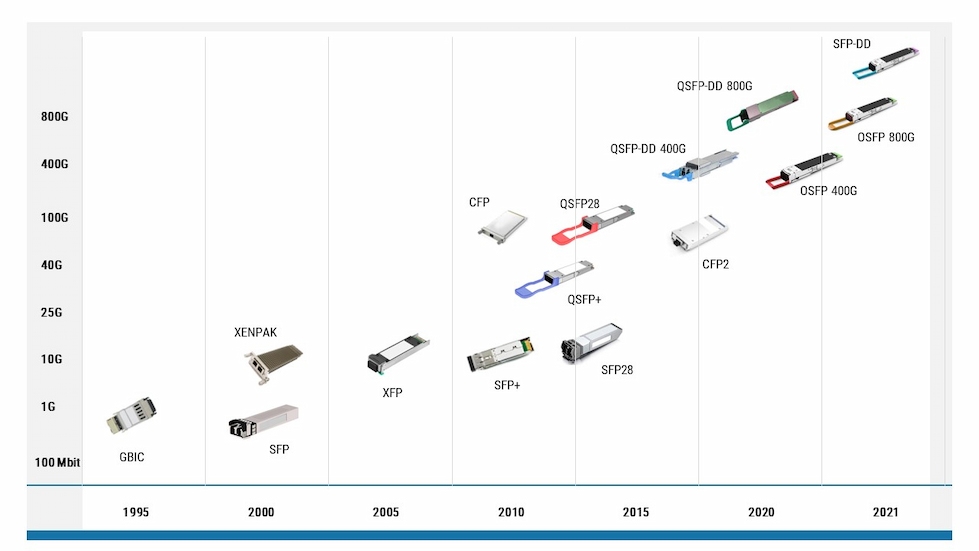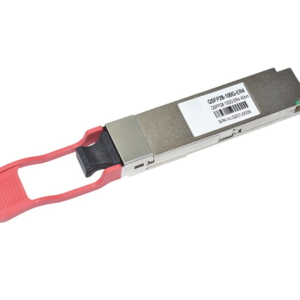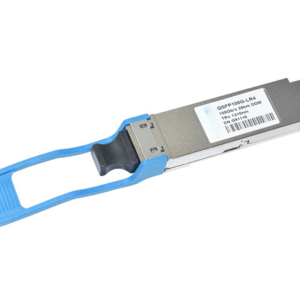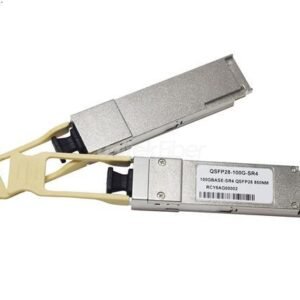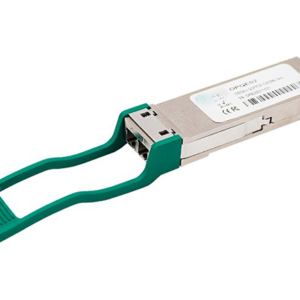
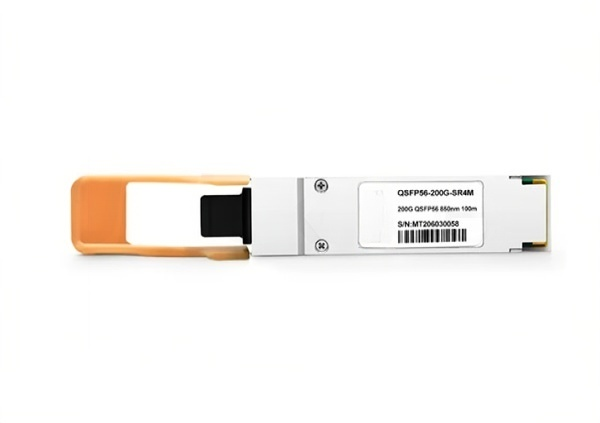
Currently, there are two main types of 200G optical modules: 200G QSFP56 and 200G QSFP-DD. Both are designed for high-performance computing and data centers, and both are backwards compatible with earlier QSFP versions including QSFP28.
200G QSFP56 vs 200G QSFP-DD
The difference between the two is mainly reflected in different modulation technologies. NRZ and PAM4 are two different types of digital modulation technologies. NRZ stands for non-return to zero code, and its other name is PAM2. A modulation method with two voltage levels representing logic 0 and logic 1, PAM4 pulse amplitude modulation technology uses four voltage levels to represent four combinations of two-bit logic 11, 10, 01 and 00. As a result, the transmission speed of PAM4 signals is twice that of traditional NRZ signals.
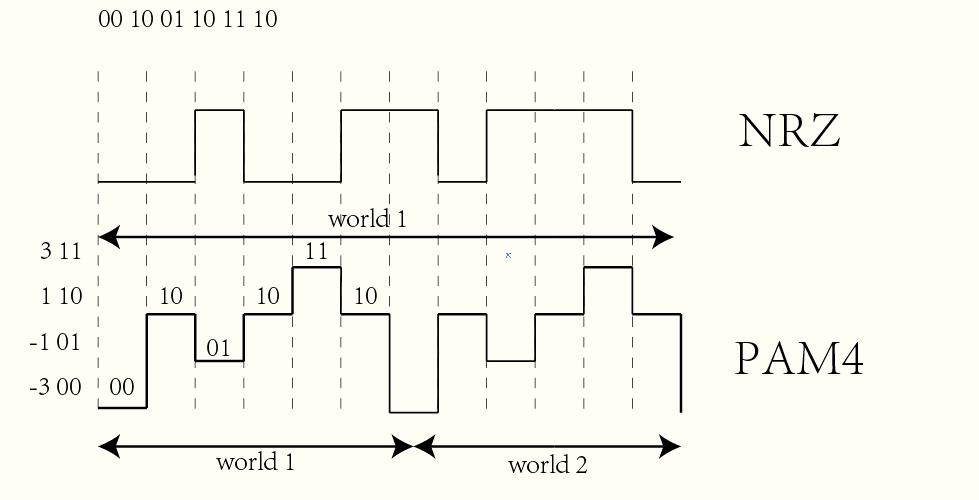
The main advantage of PAM4 over NRZ is faster transmission speed. Although NRZ modulation is not fast enough, NRZ (200G) has the advantages of lower power consumption, lower latency and easy deployment. 200G NRZ enables low-cost interconnect solutions within the data center.
Advantages and Disadvantages of 200G QSFP56 and QSFP-DD
QSFP56 is specially designed to meet the needs of 200G applications, but its technical architecture does not support direct upgrade to network environments with 400G and above rates. In contrast, QSFP-DD is compatible with both 200G and 400G rate versions, and allows users to gradually upgrade as needed, with greater scalability and flexibility.
In terms of modulation method, QSFP56 uses PAM4 technology, while QSFP-DD usually uses NRZ modulation when achieving 200G rate.
In terms of channel configuration, QSFP56 only needs 4 channels to complete 200G data transmission. Compared with QSFP-DD, which requires 8 channels, it has more advantages in terms of optical fiber cost and link loss.
In terms of price, the price of QSFP-DD is about 15% to 30% higher than that of QSFP56. It is worth noting that if current network equipment does not generally support QSFP-DD, it may be more economical to choose QSFP56. However, if you have sufficient budget and focus on future network expansion and performance optimization, QSFP-DD fiber optic transceiver is an ideal choice for easier subsequent upgrades.
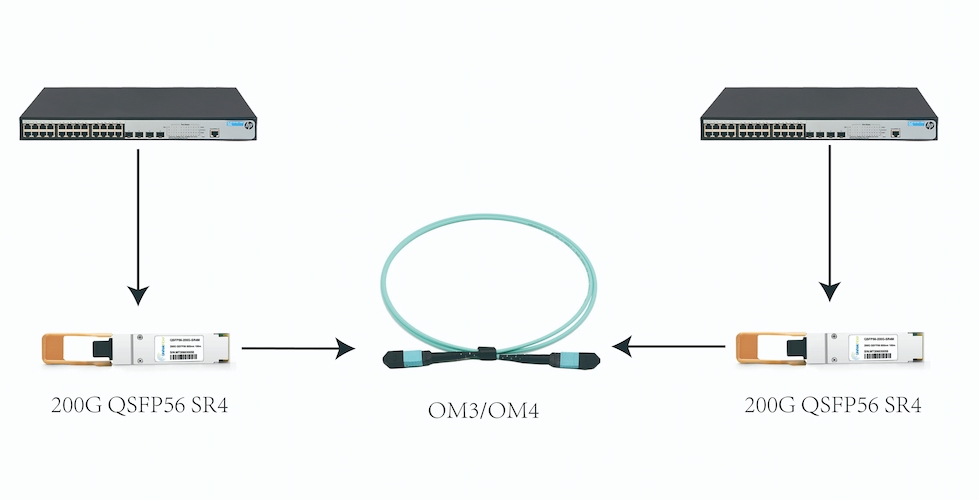
Optical Transceiver Modules Tested in Host Devices for Proven Interoperability
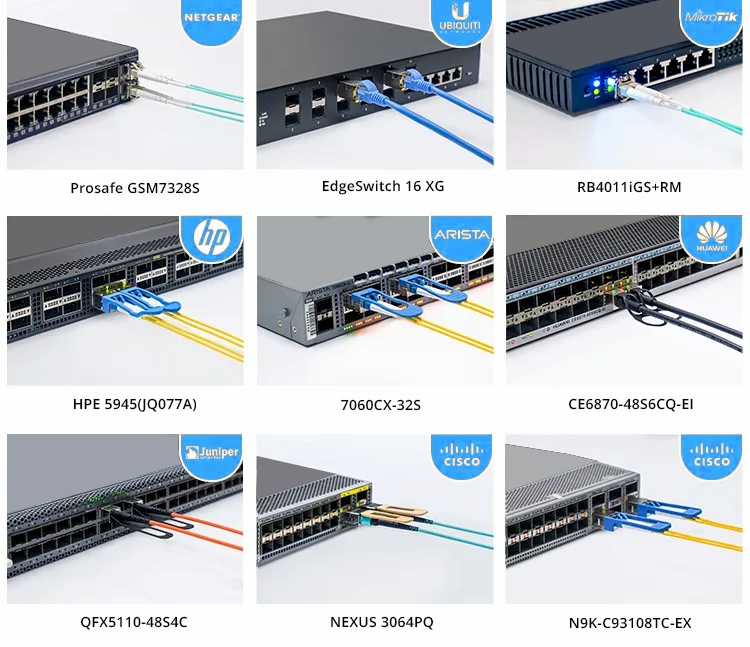
Ensuring interoperability between optical transceiver modules and host devices is of utmost importance in optical network systems. The 200G QSFP56 optical transceiver module serves as a vital component, enabling the efficient transmission and reception of optical signals while converting them to electrical signals for seamless communication between switches. At Op2Link, our optical transceiver modules undergo rigorous testing to guarantee compatibility and flawless operation across various multi-brand switch environments. This testing process ensures that our optical transceiver modules can be confidently integrated into different switch systems, providing reliable and high-performance connectivity within optical networks.
Enabling Seamless Integration: 200G QSFP56 Optical Transceiver’s Backward Compatibility
200G QSFP56 optical transceiver offer backward compatibility with QSFP+ and QSFP28 optical transceivers, allowing for a smooth integration and migration process within existing network infrastructures. This compatibility enables the reuse of QSFP+ and QSFP28 optical transceivers, supports multi-speed operation, ensures interoperability, and provides a flexible upgrade path for evolving network requirements. With 200G QSFP56 optical transceiver, network operators can leverage their existing infrastructure while gradually transitioning to higher speeds and enhanced performance.