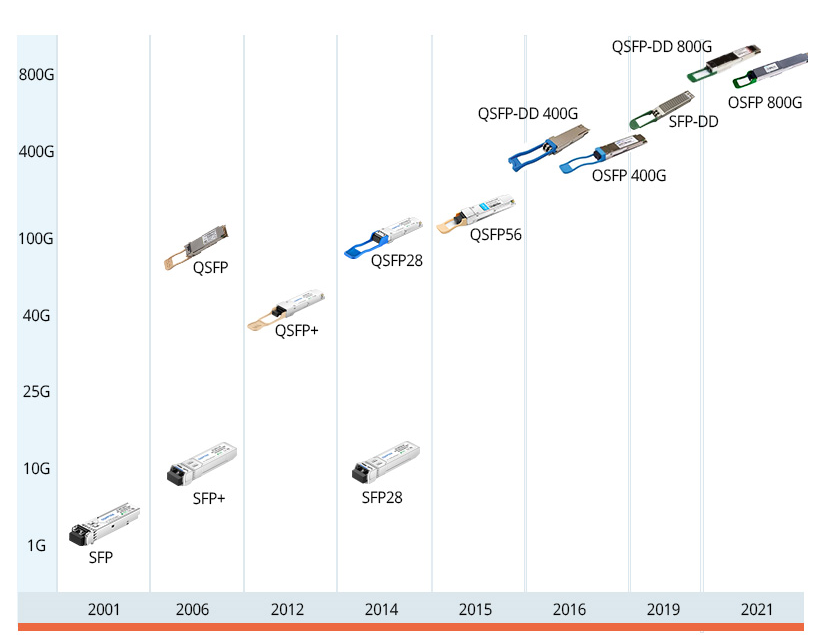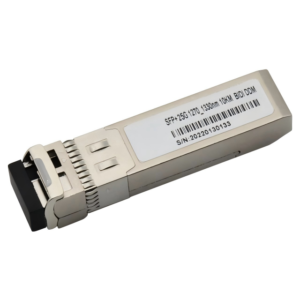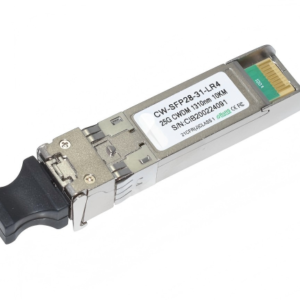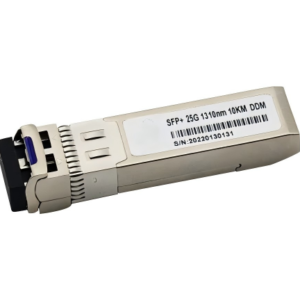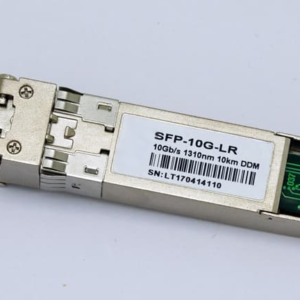
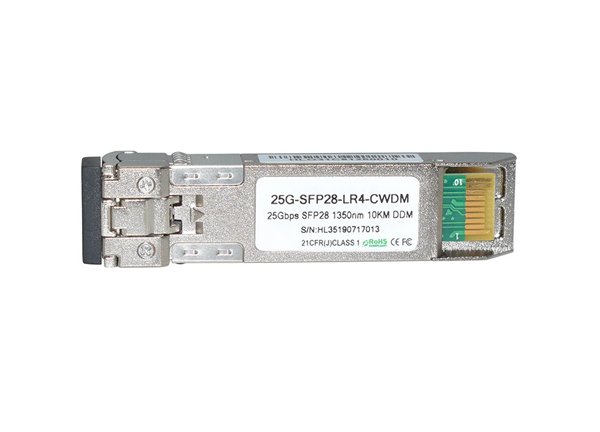
The Cisco-compatible SFP28 transceiver provides up to 10 km of 25GBase-BX throughput over single-mode fiber (SMF) using 1350nm wavelengths via LC simplex connectors. This SFP28 transceiver must be used with another transceiver or network equipment of complementary wavelengths. Optical transceiver provides 25GBASE Ethernet connectivity options for 25G Ethernet, telecom and data centers. It is fully compliant with SFF-8472, SFF-8402, SFF-8432, SFF-8431, MSA and eCPRI standards.
Network Connectivity
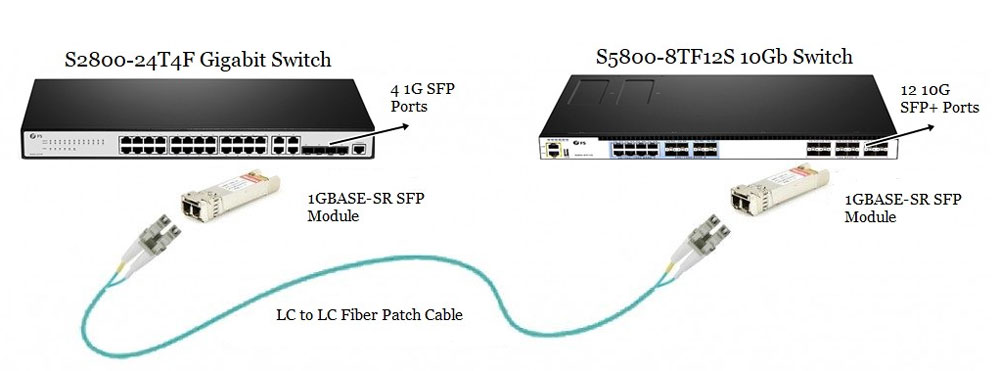
Direct connection with 25GBASE SFP28 LR Transceivers
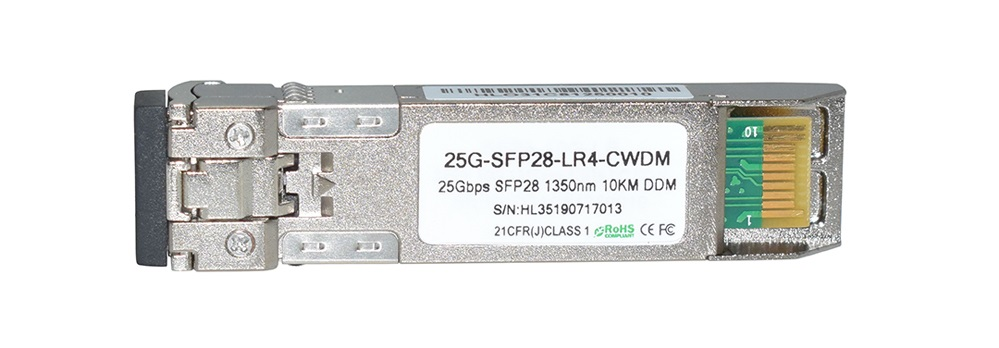
The electrical interface uses a 20 contact edge type connector. The optical interface uses simplex LC receptacle. This fiber module incorporates Fibertronics proven circuit and DFB technology to provide reliable long life, high performance, and consistent service.
Tested in Host Devices for Proven Interoperability
Due to the explosive growth of data center traffic, higher-speed 25G optical modules are required to cope with the huge traffic transmission demand.
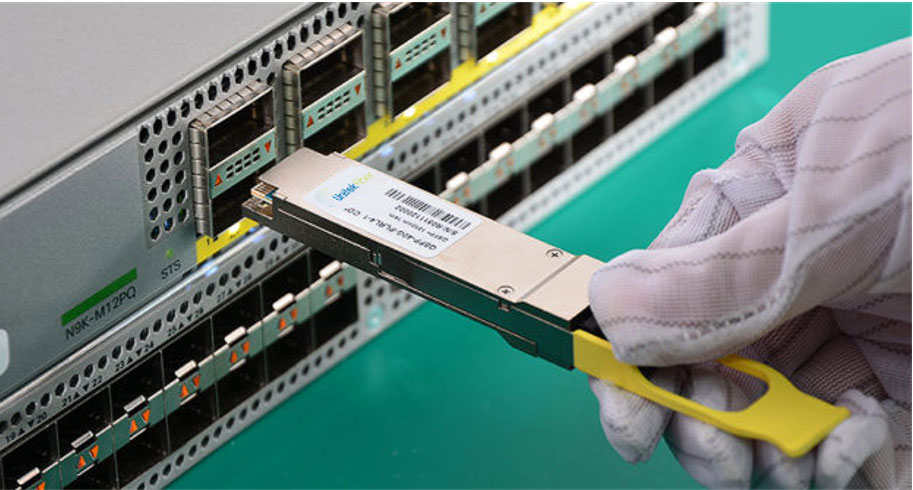
Application of the 25G SFP28 transceiver module
Data Centers: The 25G transceiver module is popularly used in data centers to connect servers, switches, and storage devices.
Telecommunications: The 25G transceiver is widely used in telecommunications networks to provide high-speed connectivity between different locations.
Enterprise Networks: The SFP28 fiber module is an efficient solution for enterprise networks that require high throughput and low latency. It is commonly used to connect routers, switches, and firewalls.
Wireless Networks: The 25G SFP28 transceiver module is also used in wireless networking applications to provide high-speed connectivity between access points and backhaul links.
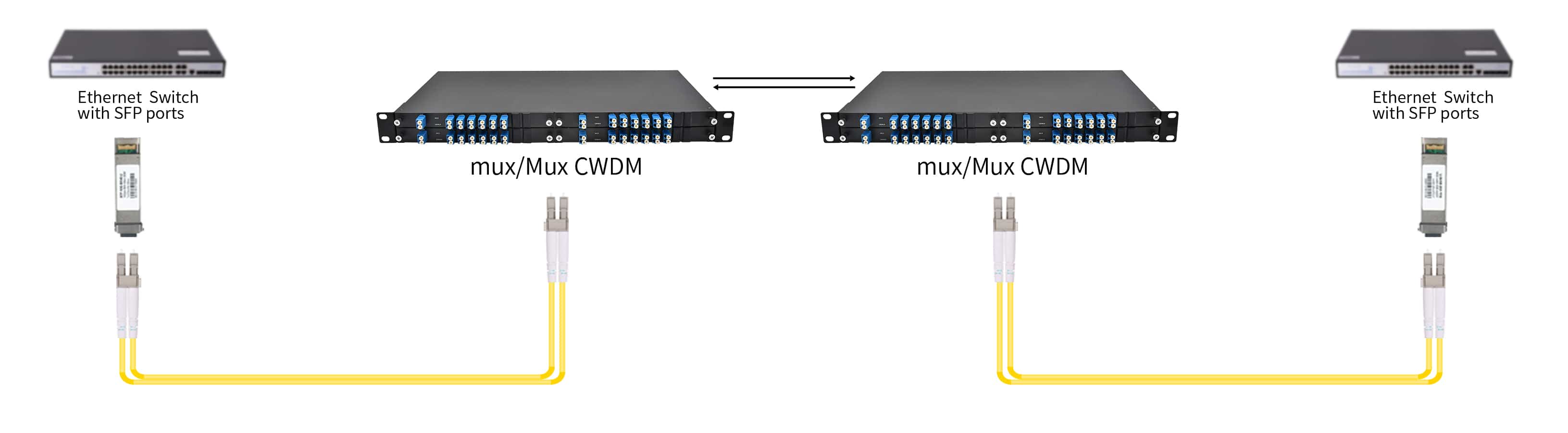
The 25G SFP28 optical module adopts high-performance and low-cost DML lasers and utilizes the LAN-WDM optical wavelength, which has become an ideal solution for 5G fronthaul, which can meet various application scenarios of fronthaul. Optical modules can realize passive wavelength division multiplexing and reduce fiber resource consumption.