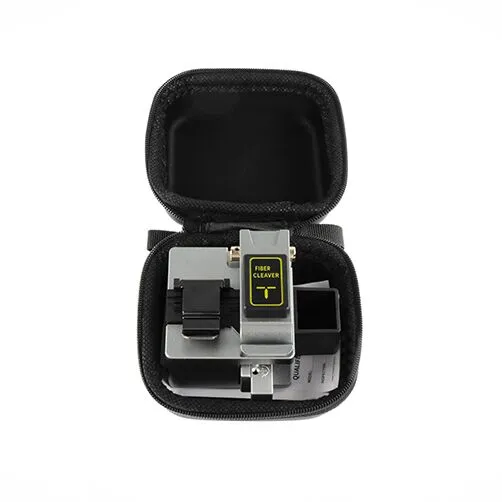
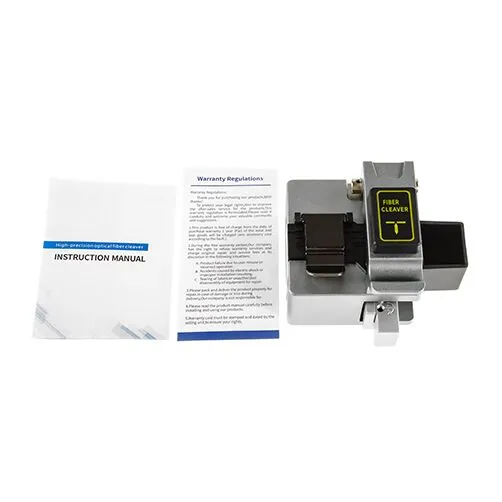
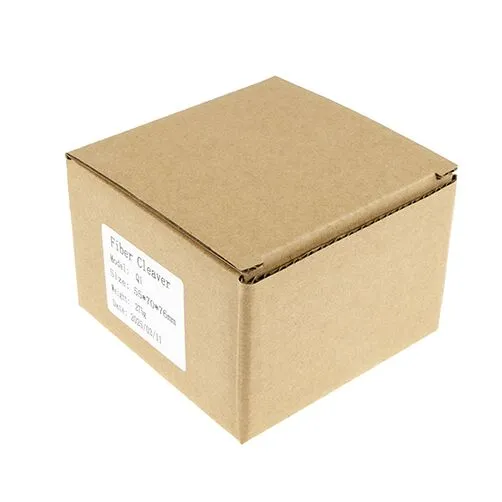
Fiber Cleaver Instruction Manual
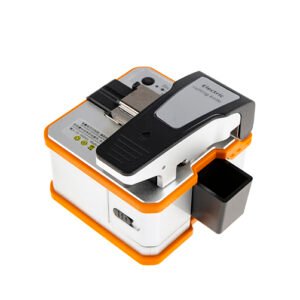
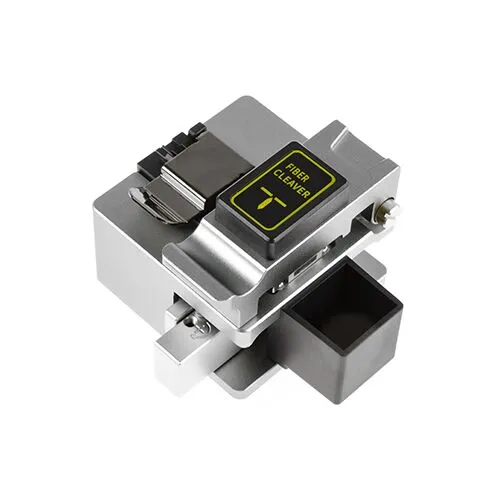
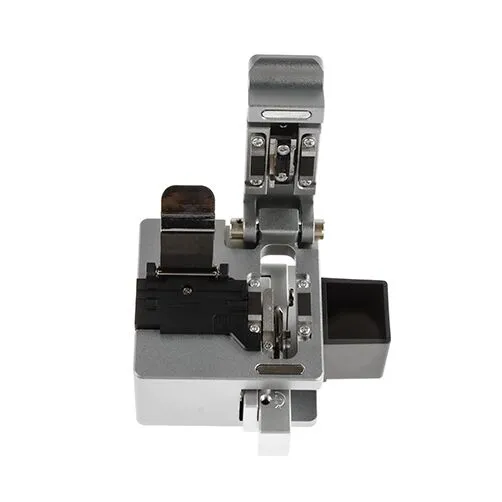
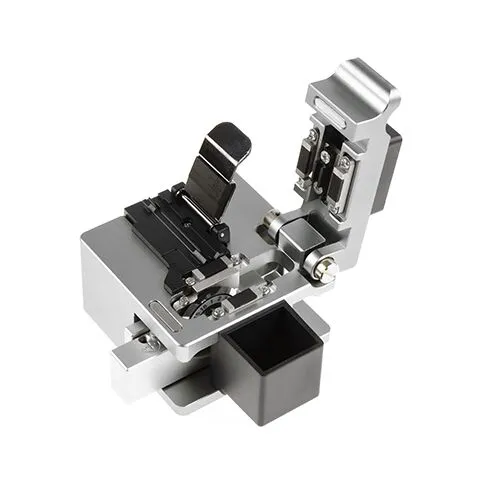
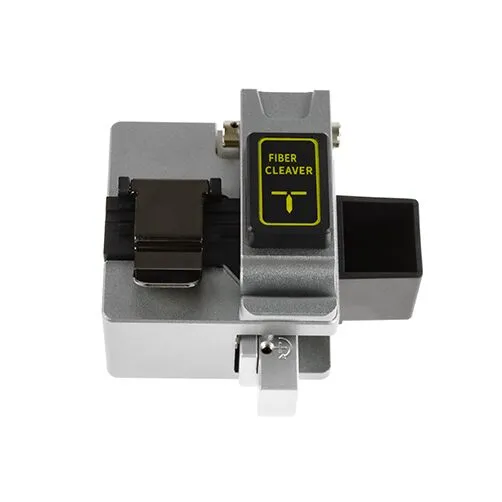
The Q1 High Precision Optical Fiber Cleaver is a compact and reliable fiber cutting tool, engineered for high-precision performance. Its cutting angle accuracy of ≤0.5° ensures clean and precise cuts, making it ideal for fusion splicing and fiber optic network deployments.
Weighing only 280g, the Q1 Cleaver is lightweight and portable, perfect for field technicians and telecom engineers. Designed to handle 0.25mm and 0.9mm coated fibers, it ensures consistent and stable results for single-core silica fibers.
With a durable tungsten steel blade and a sturdy impact-resistant design, this cleaver delivers long-lasting performance for various fiber optic applications.
Engineering Suitability & Selection Boundaries
- When This Product Is the Right Choice
- Typically suitable when your workflow relies on single-fiber cleaving consistency as part of routine fusion splicing preparation.
- Commonly fits teams working primarily with 0.25mm and 0.9mm fiber forms within the tool’s stated handling range.
- Usually appropriate when a compact, lightweight cleaver is needed for field kits and on-site repairs where portability matters.
- Often chosen when technicians can keep a stable routine for blade rotation/height control and basic cleaning to maintain repeatable outcomes.
- Typically works well when the job site can enforce safe handling for sharp blades and fiber fragments, including controlled scrap collection.
- When This Product May NOT Be Suitable
- May not be appropriate when daily work frequently involves fiber/cable forms outside the supported 0.25mm / 0.9mm range, where clamping and positioning behavior can become inconsistent.
- Often not suitable in environments where the tool is likely to experience drops or repeated impacts, which commonly affects cutting repeatability over time.
- May be less suitable for teams that need minimum operator-dependence, since manual handling habits can influence cleave stability across different technicians.
- May not fit processes that require a fixed, highly standardized shop-floor workflow if on-site conditions make scrap control and cleanliness difficult to maintain.
- Common Selection Mistakes to Avoid
- Treating the cleaver as “set-and-forget” and not managing blade wear via rotation/height adjustment, which commonly leads to drifting results.
- Using the wrong handling approach for the fiber form factor, which may cause slippage, coating damage, or inconsistent cleave quality.
- Continuing work after abnormal cutting behavior appears, instead of stopping to check handling condition and maintenance status.
- Letting fiber fragments accumulate or disposing scraps improperly, which commonly creates safety risk and increases contamination-related variability.
Specification
| Parameter | Details |
| Applicable Fiber Type | Single-core silica fibers |
| Applicable Fiber Coating Diameter | 0.25mm & 0.9mm |
| Applicable Fiber Cladding Diameter | 125μm |
| Fiber Cutting Length (0.25mm Cladding) | 9~16mm |
| Fiber Cutting Length (0.9mm Cladding) | 10~16mm |
| Cutting Angle Accuracy | ≤0.5° |
| Dimensions | 63mm (W) × 56mm (D) × 56mm (H) |
| Weight | ~280g |
Safety Precautions
- Disassembling or Modifying the Cutting Knife
- Strictly prohibited:Do not disassemble or modify the cutting knife, as it may cause malfunctions.
- Handling the Cutting Knife
- Precision machinery:Dropping or hitting the cleaver may damage accuracy and pose safety risks. Handle with care.
- Optical Fiber Fragments
- Sharp and fine:Fiber fragments can cause injury. Wear protective glasses to prevent accidents.
- Proper Disposal of Fiber Scraps
- Separate waste disposal:Dispose of fiber scraps in a designated waste area, not regular trash.
- Sharp Blade Caution
- Risk of injury:Do not touch the blade directly. Handle with caution.
- Faulty Cutting Knife
- Stop using immediatelyif the cutting knife fails or behaves abnormally. Contact after-sales support for assistance.
Application Details
- Fiber Optic Network Deployment: Essential for telecom, data centers, and FTTH installations.
- Fusion Splicing Preparation: Provides clean and precise fiber ends for high-quality splicing.
- Field & Emergency Repairs: Compact, portable design makes it ideal for fieldwork and on-site maintenance.
- R&D and Lab Testing: Precision cutting supports research and fiber optic component testing.
FAQ
Q1: What cleave angle can Q1 achieve?
Typically ≤0.5°, suitable for splicing.
Q2: Does it support 250µm and 900µm fibers?
Yes, it clamps coated and buffered fibers securely.
Q3: Is blade height adjustable?
Yes, manual rotation and height control extend blade life.
Q4: Does it include a scrap collector?
Yes, integrated fiber scrap storage.
Q5: Is Q1 suitable for field technicians?
Yes, its compact and lightweight design is ideal for field use.
Q6: Does it require frequent maintenance?
Minimal—occasional blade cleaning and rotation.
Q7: Can it cut multimode fiber?
Yes, supports both SM and MM fibers.