DESCRIPTION
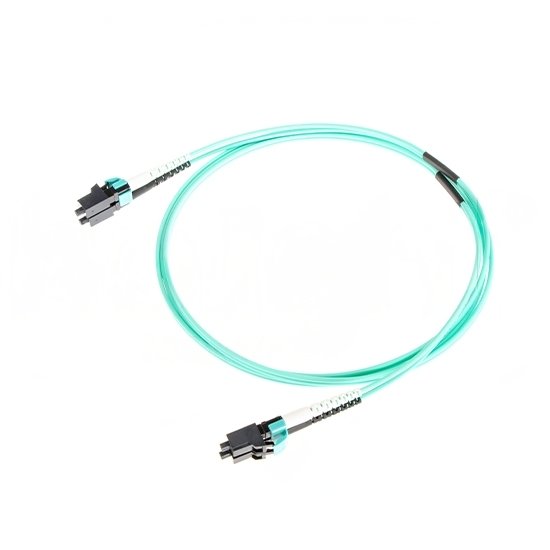
The Custom LC to LC OM3 50/125µm Duplex Fiber Optic Patch Cord is designed for high-density multimode cabling in data centers, telecom rooms, and enterprise networks. Using OM3 graded-index multimode fiber and duplex LC connectors, it supports 10GBase-SR and higher-speed short-reach links while maintaining consistent optical performance. With multiple jacket options and full OEM customization, this patch cord provides reliable, standards-aligned connectivity for structured cabling and equipment interconnection.
LC Duplex Connectors for High-Density Panels
LC connectors use a compact 1.25 mm ceramic ferrule, making them ideal for high-port-count patch panels and dense rack environments. The duplex clip format simplifies A/B channel management in multimode links.
OM3 50/125 µm Multimode Fiber Performance
OM3 fiber is optimized for short-reach high-speed transmission at 850 nm, commonly used in 10GBase-SR deployments. It provides consistent bandwidth performance for intra-data-center and equipment room connections.
2.0 mm Jacket for Flexible Routing
A 2.0 mm outer diameter improves flexibility for patching inside racks, cable managers, and tight bend paths. It supports cleaner cable dressing while maintaining required bend-radius control.
Factory-Tested Optical Quality
Each patch cord is factory tested for insertion loss and return loss, helping ensure stable link budgets and predictable performance during commissioning and maintenance.
Installation-Specific Jacket Options
LSZH supports low-smoke environments, PVC suits standard indoor deployments, and OFNP is available for plenum-rated pathways depending on local building and fire codes.
| Parameter | Specification |
| Connector Type | LC to LC |
| Fiber Mode | OM3 50/125 µm multimode |
| Fiber Type | Duplex |
| Jacket OD | 2.0 mm |
| Jacket Color | Aqua |
| Endface Polish | UPC to UPC |
| Operating Wavelength | 850 / 1300 nm |
| Insertion Loss | ≤ 0.3 dB |
| Return Loss | ≥ 30 dB |
| Attenuation at 850 nm | 3.0 dB/km |
| Attenuation at 1300 nm | 1.0 dB/km |
| Polarity | A (Tx) to B (Rx) |
| Minimum Bend Radius | 30 mm |
| Jacket Material Options | LSZH / PVC / OFNP |
| Operating Temperature | -40 to 75 °C |
| Storage Temperature | -45 to 85 °C |
- 10GBase-SR patching between ToR switches and servers in data centers
- LC patch panel interconnects inside telecom rooms and equipment racks
- Enterprise LAN backbone connections using OM3 multimode fiber
- Cloud storage networks with short-reach multimode uplinks
- Lab and test setups connecting instruments and multimode devices
- Structured cabling jumpers for ODF and distribution frames
Q1: What is OM3 50/125 µm fiber typically used for?
OM3 multimode fiber is commonly used for short-reach high-speed links such as 10GBase-SR in data centers and enterprise networks.
Q2: What is the difference between simplex and duplex patch cords?
Simplex has one fiber for one-way transmission, while duplex has two fibers for bidirectional communication, typically used for Ethernet links.
Q3: Should I choose UPC or APC for OM3 multimode patch cords?
For multimode OM3 links, UPC is the standard choice. APC is mainly used in single-mode applications where lower back reflection is required.
Q4: What jacket material should I choose: LSZH, PVC, or OFNP?
LSZH is suitable for low-smoke requirements, PVC is common for standard indoor use, and OFNP is used for plenum spaces requiring higher fire performance.
Q5: Can you customize the length, polarity, and labeling?
Yes. Length, polarity (A-B or A-A), labels, color, and packaging can be customized for project needs.
Q6: What test items are performed before shipment?
Each patch cord is factory tested for insertion loss and return loss to ensure stable optical performance.
Q7: Can I request a different cable diameter such as 3.0 mm or 0.9 mm?
Yes. 0.9 mm, 2.0 mm, and 3.0 mm cable options are available depending on routing and durability requirements.
Q8: Is this patch cord suitable for 40G and 100G applications?
It can be used in certain short-reach multimode scenarios; actual suitability depends on the transceiver type, link distance, and cabling architecture.