DESCRIPTION
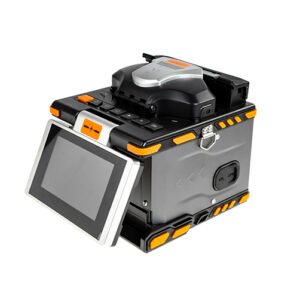
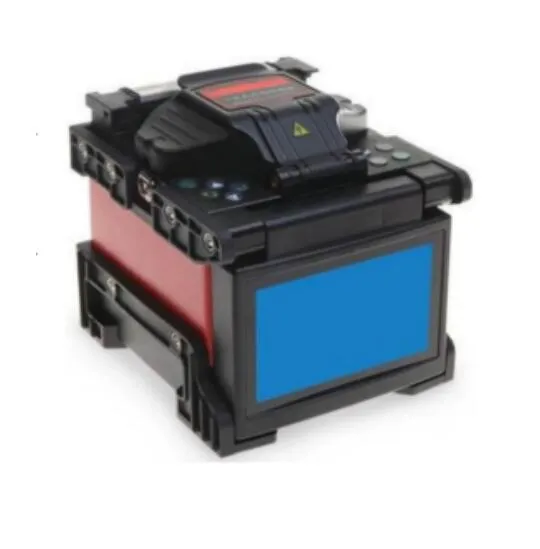
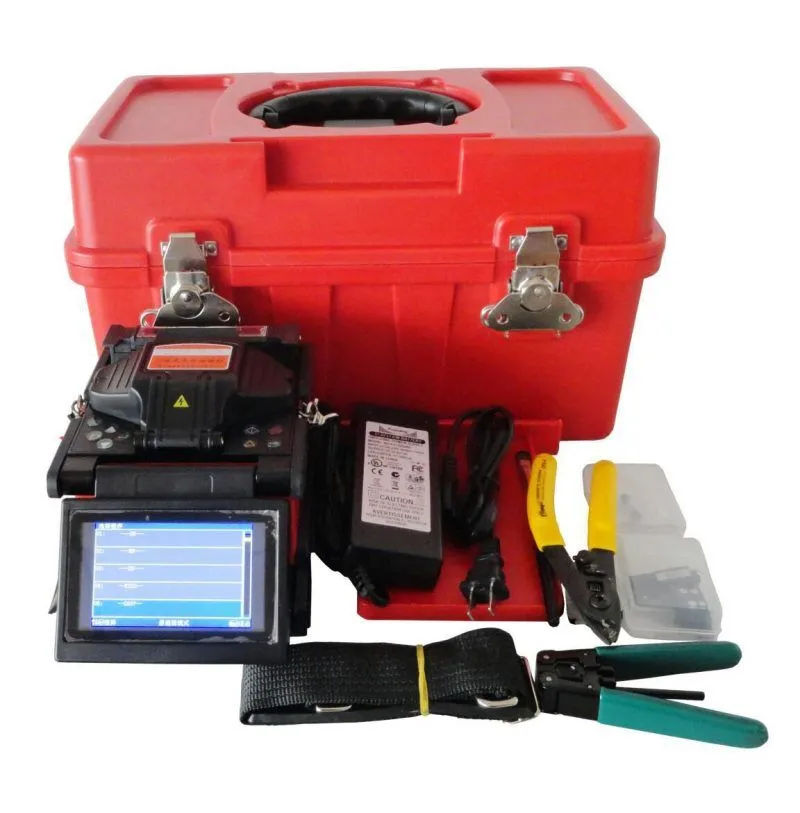
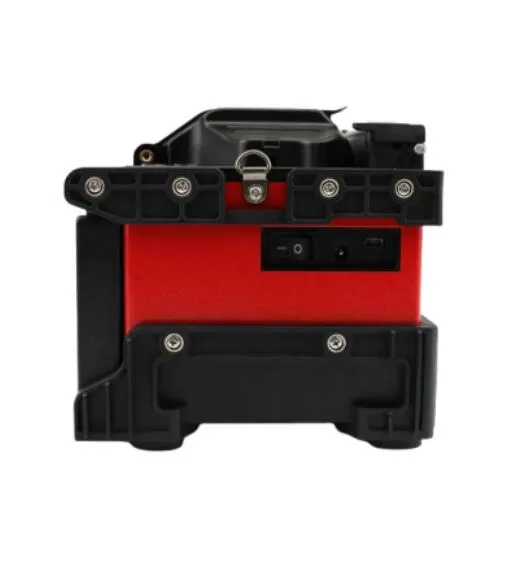
The FS-740 Mini FTTx Fusion Splicer is a high-performance splicing solution designed for fast, precise, and reliable fiber fusion across a wide range of fiber types. With its compact form factor and field-ready durability, it’s engineered to meet the rigorous demands of FTTx deployment, SOC splicing, and drop cable integration. Whether in telecom networks or fiber restoration tasks, this splicer delivers outstanding repeatability and convenience.
Engineering Suitability & Selection Boundaries
- When This Product Is the Right Choice
- Typically suitable when projects require a compact splicer optimized for FTTx last-mile work, especially where portability and quick setup matter.
- Commonly selected when field teams need to splice drop cables, pigtails, and standard fibers in one workflow using a three-in-one fixture.
- Usually a good fit when the job includes splice-on connector (SOC) work, and the crew wants one device that supports that preparation flow on site.
- Often appropriate when deployments can benefit from preset programs while still needing flexibility for project-specific fiber conditions via custom programs.
- Typically suitable when work sites operate within the stated temperature/altitude/humidity limits, and the device will be transported frequently between endpoints.
- Commonly selected when teams rely on consistent field readiness from a battery workflow and can manage charging for splicing + heating cycles.
- When This Product May NOT Be Suitable
- May not be appropriate where field conditions commonly exceed the stated operating limits or where condensation and unstable work surfaces are frequent, since repeatability can suffer in practice.
- Often not suitable if the crew cannot keep consistent routines for cleave length control (8–22mm) and sleeve handling, which are commonly sensitive in drop-cable and SOC workflows.
- May be less suitable when organizations require strict standardization and cannot manage program governance (preset vs manual settings) across multiple technicians and teams.
- Typically less suitable for workflows that demand highly uniform factory-style processes where frequent manual program changes are discouraged.
- May not be ideal when the job requires splicing setups that do not align with the supported sleeve lengths or tension-test routine, as the field process may become inconsistent.
- Common Selection Mistakes to Avoid
- Treating “SOC compatible” as plug-and-play and skipping disciplined control of fiber preparation and cleave length, which commonly drives rework.
- Allowing different crews to use different manual programs without a controlled baseline, leading to inconsistent results across the same project.
- Assuming full-auto mode removes the need for stable setup—fixture placement and cleanliness commonly remain key to repeatability.
- Underestimating how harsh field handling affects outcomes and not enforcing careful transport/placement, even with a shockproof shell.
- Using splice-loss readouts as the only quality indicator and neglecting consistent tension-test and sleeve process routines that commonly reveal field issues early.
Feature Details
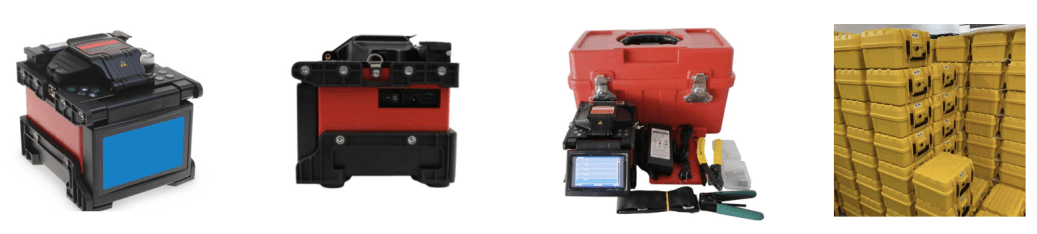
- Three-in-One Fixture: Compatible with standard fibers, pigtails, and splice-on connectors for efficient cable preparation
- Preset & Custom Splice Programs: Offers built-in flexibility for different project types
- Durable Housing: Shockproof shell and reinforced corners reduce the risk of impact damage
- Easy GUI Operation: Clear interface with responsive touch control boosts user efficiency
- Long Battery Life:5200mAh lithium battery supports extended field use
- Multi-Language System: Ideal for international users and project teams
Product Specifications
| Parameter | Specification |
| Applicable Fiber Types | SM, MM, DS, NZDS (G655), G657, EDF, pigtail, drop cable, SOC |
| Average Splice Loss | SM: 0.02dB; MM: 0.01dB; DS: 0.04dB; NZDS: 0.04dB |
| Return Loss | ≥60dB |
| Cleaved Fiber Length | 8–22mm |
| Tension Test | 2.0N (200gf) |
| Protection Sleeve Length | 20mm, 40mm, 60mm |
| Splice Program | 5 preset + 75 manual setting programs |
| Operation Modes | Fully Auto / Semi-Auto / Manual |
| Display | 4.3″ Color LCD Monitor |
| Languages Supported | English, Chinese, Russian, Spanish, Portuguese |
| Operating Environment | -25°C to +50°C, ≤95% RH, Altitude 0–5000m |
| Storage Environment | -40°C to +80°C, ≤95% RH |
| Power Supply | AC: 85–260V; Battery: 12V / 5200mAh |
| Battery Life | Up to 180 splicing + heating cycles per charge |
| Dimensions (mm) | 142 (D) × 122 (W) × 138 (H) |
| Weight | 1.95kg |
Application Details
- FTTx Projects: Enables rapid fiber-to-the-home/building installation with SOC compatibility
- Emergency Repairs: Lightweight and ready-to-go for field technicians performing fiber restoration
- Telecom & CATV Networks: Reliable performance across long-haul and access network segments
- R&D and Lab Use: Suitable for fiber splicing verification, prototype building, and training
- Drop Cable Splicing: Especially designed for field environments with harsh conditions
FAQ
Q1: Is FS-740 designed for FTTH?
Yes, optimized for last-mile drop cable splicing.
Q2: Does it support SOC connectors?
Yes, compatible with common splice-on connector types.
Q3: Is it lighter than standard fusion splicers?
Yes, significantly more compact and easy to carry.
Q4: What fibers does it support?
It supports SM, MM, DS, NZDS (G.655), G.657, EDF fibers, as well as pigtails, drop cables, and splice-on connectors.
Q5: What is the typical splice time?
Around 7–10 seconds.
Q6: Does it include a heater?
Yes, built-in compact heater for protective sleeves.
Q7: Is it suitable for technicians with limited experience?
Yes, simple interface and automated operation.