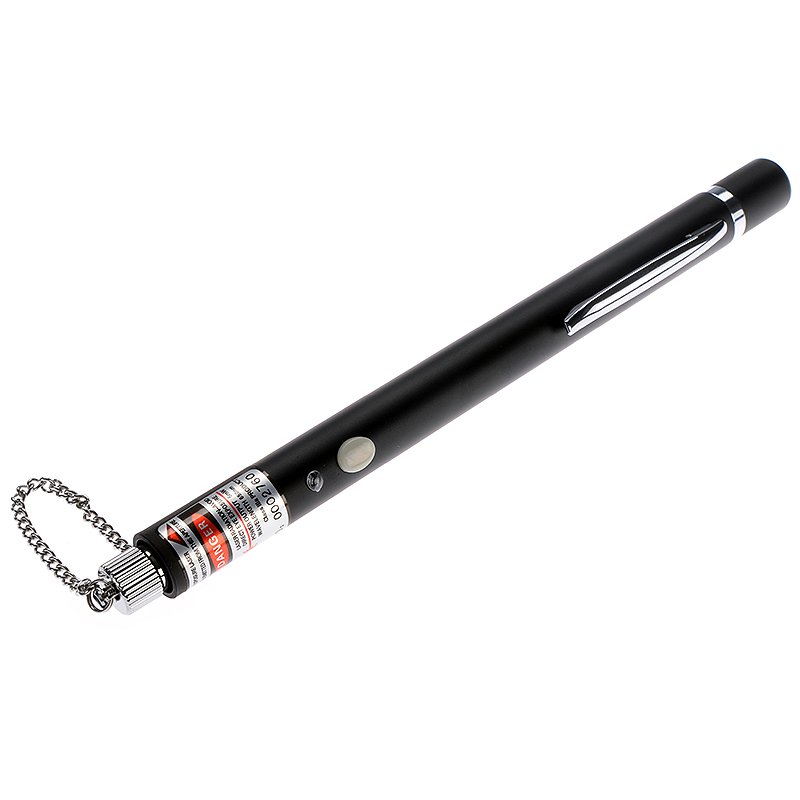
DESCRIPTION
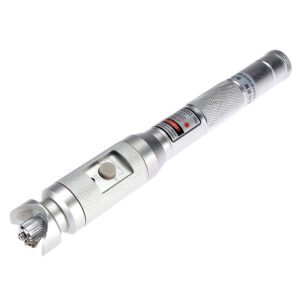
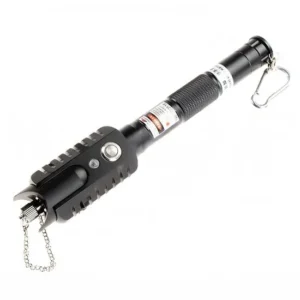
The HTO9V21 Visual Fault Locator (Pen-Type) is a compact and cost-effective tool for detecting faults and verifying fiber continuity. Its bright 650 nm laser accurately identifies breaks, bends, and poor connections, even in OTDR dead zones. With its durable, portable design and universal connector compatibility, it is ideal for field personnel, network maintenance, and testing labs.
Feature Details

- High Visibility Laser: 650 nm laser with options for 5 mW to 30 mW output ensures easy fault detection.
- Versatile Operation: CW mode for steady tracing and pulsed mode (2Hz–9Hz) for bright ambient conditions.
- Connector Flexibility: 5mm universal connector works with standard interfaces; 1.25mm LC adapter available.
- Energy Efficient: Operates on two AA batteries, with a runtime of up to 60 hours and low battery warning.
- Durable Design: Built to withstand drops and dust while protecting against electrostatic discharge (ESD).
Product Specifications
| Attribute | Details |
| Wavelength | 650 nm ± 10 nm (635 nm optional) |
| Emitter Type | FP-LD |
| Output Power Options | 5 mW (≥5 km), 10 mW (≥10 km), 20 mW (≥20 km), 30 mW (≥30 km) |
| Connector Type | 2.5mm universal; 1.25mm LC adapter available |
| Operating Modes | Continuous Wave (CW) and Pulsed |
| Pulse Frequency | 2 Hz to 3 Hz / 9 Hz |
| Power Supply | 2 × AA batteries |
| Battery Type | LR6 AA alkaline |
| Operating Temperature | -20°C to +60°C |
| Storage Temperature | -40°C to +85°C |
| Dimensions | 13 × 167 mm |
| Weight | 50 g (without battery) |
Selection Notes
- Typically selected when technicians want a pen-type 650nm VFL with selectable output (5–30 mW) and CW/Pulse modes to adapt tracing visibility to different on-site conditions.
- May not be appropriate for teams that require native LC handling without adapter dependency, or workflows where operators need a single fixed behavior and want to avoid variability from mode/power selection.
Application Details
- Field Maintenance: Ideal for identifying fiber faults during installation and repair.
- Network Continuity Testing: Ensures end-to-end fiber integrity with precise fault detection.
- Connector Inspection: Locates microbends or issues affecting insertion and return loss.
- OTDR Dead Zone Analysis: Detects faults not visible with OTDR in short patch cords.
FAQ
Q1: What is the output wavelength?
650 nm visible red laser.
Q2: What connectors are compatible?
Universal 2.5mm port (SC/FC/ST); LC with adapter.
Q3: What modes are supported?
Continuous and pulse modes.
Q4: What is the typical detection distance?
Detection range depends on output power (e.g., 5 mW ≥5 km up to 30 mW ≥30 km) and fiber condition.
Q5: What type of batteries are required?
2 × AA batteries (LR6 AA alkaline).
Q6: Can it detect microbends?
Yes, red light leakage helps identify microbends.
Q7: Is it suitable for field maintenance?
Yes, lightweight and durable for technician use.