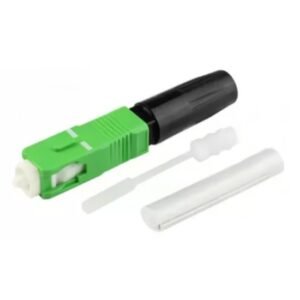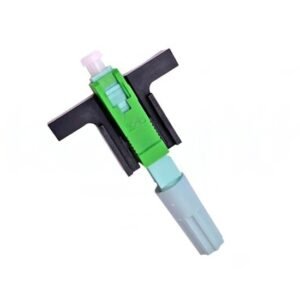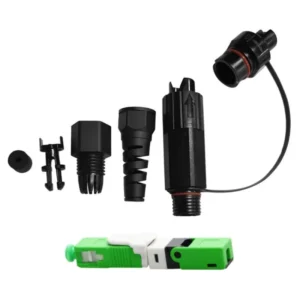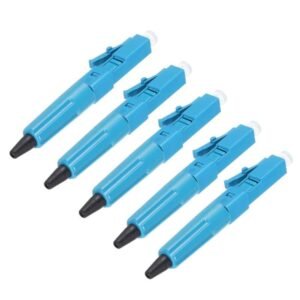
DESCRIPTION
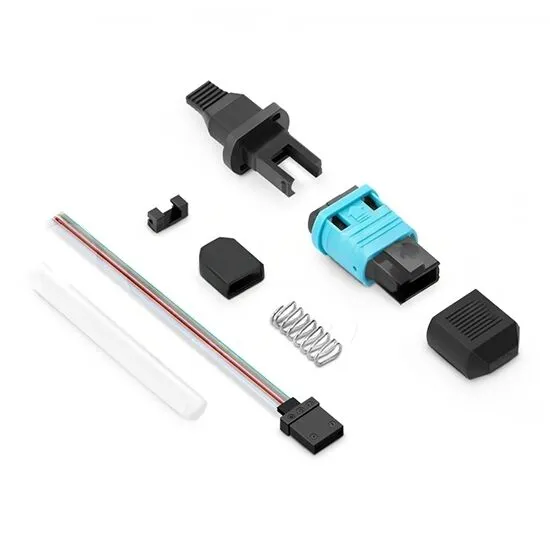
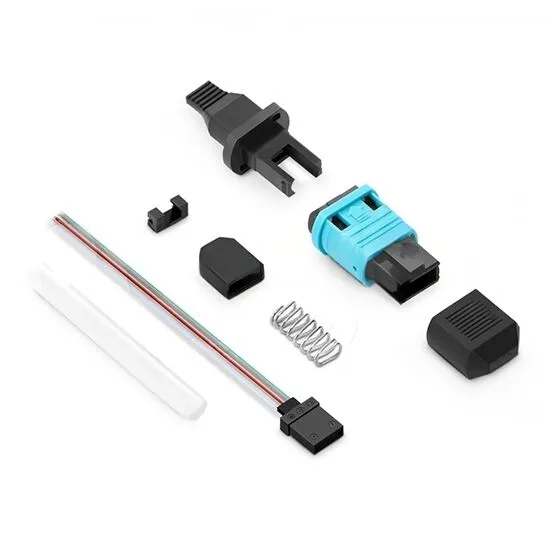
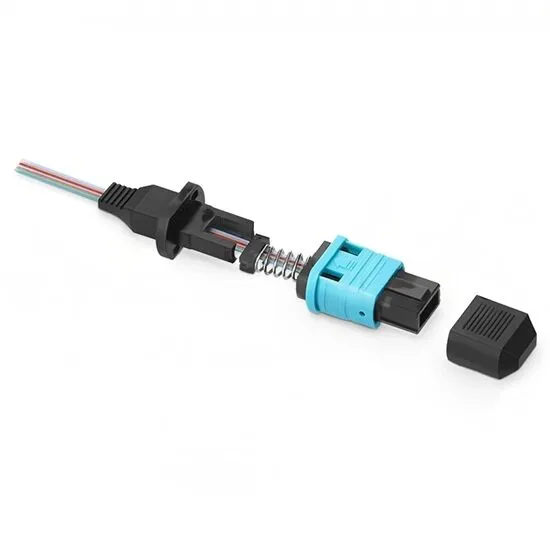
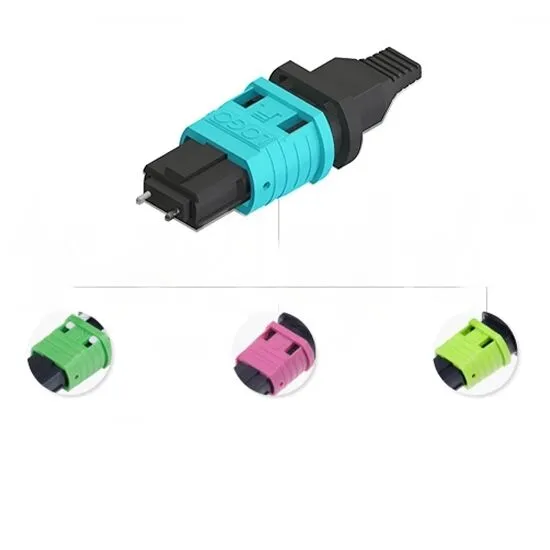
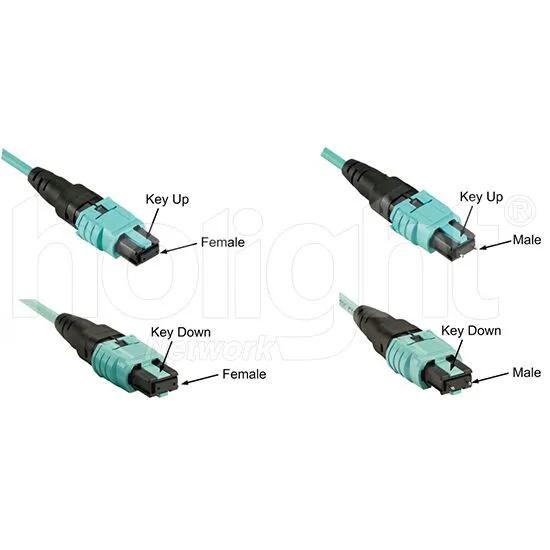
MPO/MTP Fiber Optic Connectors are designed for ultra-high-density applications in modern fiber infrastructure. These connectors terminate multi-core fibers (12/24/48 cores), allowing fast, modular, and space-saving connectivity for both multimode and single-mode networks.
With precision-engineered ferrules and optional Elite performance, they guarantee low insertion loss and superior optical performance. Available in male or female versions, with options for custom polarity and keying, the MPO/MTP connector series ensures seamless integration into any high-speed fiber optic environment.
Engineering Suitability & Selection Boundaries
- When This Product Is the Right Choice
- Typically selected for high-density backbone and parallel-optics links where 8/12/24/48-fiber modular connectivity is needed to reduce rack space and speed deployment.
- Commonly used in environments that standardize on pre-terminated trunk/cassette architectures, minimizing field termination work and making expansion predictable.
- Usually appropriate when the project has a defined plan for male vs female mating (pin vs no-pin) and can keep assemblies consistent end-to-end.
- Typically suitable when the network design locks down polarity/keying (Type A/B/C and key orientation) to match the intended channel mapping for 40G/100G/400G-style builds.
- When This Product May NOT Be Suitable
- May not be suitable when the team cannot clearly define and control polarity and keying rules, since MPO turn-up issues are commonly mapping-related rather than loss-related.
- Commonly unsuitable if the deployment cannot manage cleaning/inspection discipline for MPO ferrules, as contamination is a dominant driver of instability and unexpected loss.
- May not be appropriate when the link budget is tight but the project is using standard-grade loss targets, since higher-density links often require Elite-grade performance planning.
- Typically not suitable for installations where frequent mate/de-mate occurs without controlled handling, as multi-fiber connectors are more sensitive to technique and cleanliness than simplex connectors.
- Common Selection Mistakes to Avoid
- Ordering male/male or female/female ends without validating the full mating chain, which commonly results in non-mating assemblies during commissioning.
- Selecting fiber count (12/24/48) without confirming the cassette mapping and breakout method, which commonly causes lane-order errors at the equipment ports.
- Treating polarity as an afterthought; changing polarity later often requires rework at trunks/cassettes, not just swapping patch cords.
- Assuming low insertion loss is guaranteed without enforcing inspection/cleaning procedures, which typically determines real-field performance in MPO systems.
Feature Details
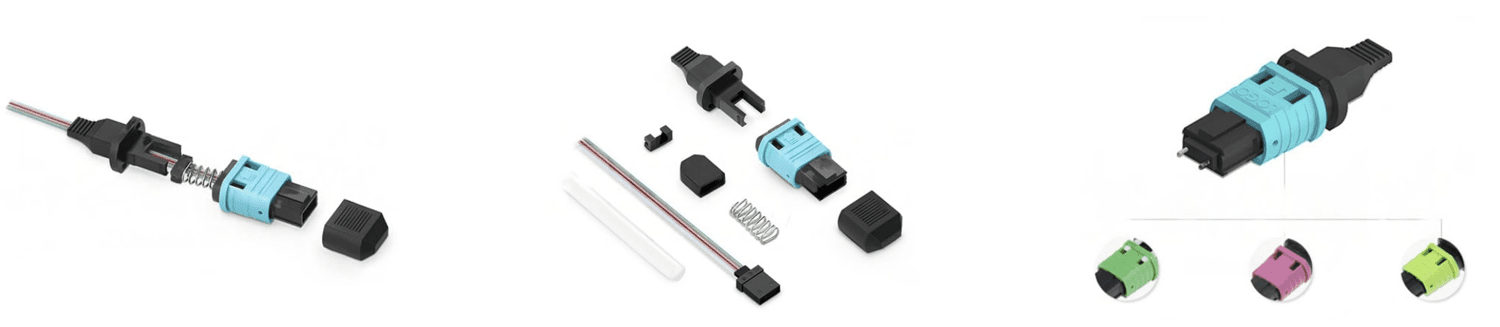
- Elite Performance Option: For applications requiring ultra-low loss, Elite MPO/MTP connectors offer tighter tolerances and higher return loss performance.
- Modular Cabling: Enables plug-and-play pre-terminated cabling, minimizing field termination and reducing deployment time.
- Flexible Configurations: Supports ribbon or round cables, with multiple polarity and keying options to suit different network designs.
- Tool-Free Latching: Simple and reliable connection using a push-pull boot for easy access even in tight spaces.
- Polarity Management: Customizable Type A/B/C polarity configurations meet complex link requirements in large installations.
Product Specifications
| Parameter | Specification |
| Fiber Count | 8/12/24/48 fibers |
| Ferrule Type | MT (Multi-fiber Termination) |
| Fiber Type | Single-mode (G652D/G657A1/A2) or Multimode (OM3/OM4/OM5) |
| Connector Type | MPO/MTP, Male (with pins) or Female (without pins) |
| Ferrule Material | High-precision molded thermoplastic |
| Insertion Loss | ≤0.35dB (Elite), ≤0.70dB (Standard) |
| Return Loss | ≥60dB (SM), ≥30dB (MM) |
| Cable Type | Ribbon cable / round cable / loose tube |
| Polarity | Type A/B/C and custom options |
| Standards Compliance | IEC-61754-7, TIA-604-5 |
| Operation Temperature | -40°C ~ +75°C |
| Mating Durability | >500 cycles |
Application Details
- Data Centers: Deploy MPO/MTP connectors to simplify backbone connections, providing modular, scalable, and high-speed data pathways for structured cabling environments.
- 5G & Metro Networks: Ensure stable performance and fast deployment with pre-terminated high-core connectors in emerging telecom infrastructure.
- Broadcast & A/V Systems: High-density connectivity reduces bulk and boosts signal integrity in signal-rich environments.
- Cloud Computing & HPC Clusters: Achieve higher throughput and minimized latency with MPO/MTP interconnects in supercomputing setups.
FAQ
Q1: What is the difference between MPO and MTP connectors?
MTP is an enhanced MPO connector with tighter mechanical tolerances and improved optical performance, while remaining fully MPO-compatible.
Q2: What fiber counts are available?
Common options include 8, 12, 24, and 48 fibers, depending on network design requirements.
Q3: What is the difference between male and female MPO/MTP connectors?
Male connectors include alignment pins, while female connectors do not. Proper mating requires one male and one female connector.
Q4: What polarity options are supported?
Type A, Type B, and Type C polarities are supported, along with custom configurations for complex links.
Q5: What is the difference between Standard and Elite grades?
Elite connectors offer lower insertion loss and tighter tolerances, suitable for high-speed and long-reach links.
Q6: Are these connectors suitable for data centers?
Yes. They are widely used in data centers for high-density backbone and parallel optics applications.
Q7: What cable types can be used?
Ribbon cables, round cables, and loose tube structures are all supported.