DESCRIPTION
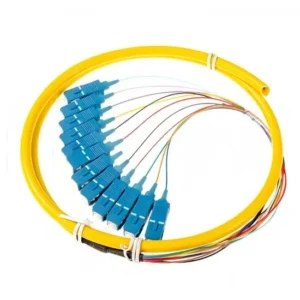
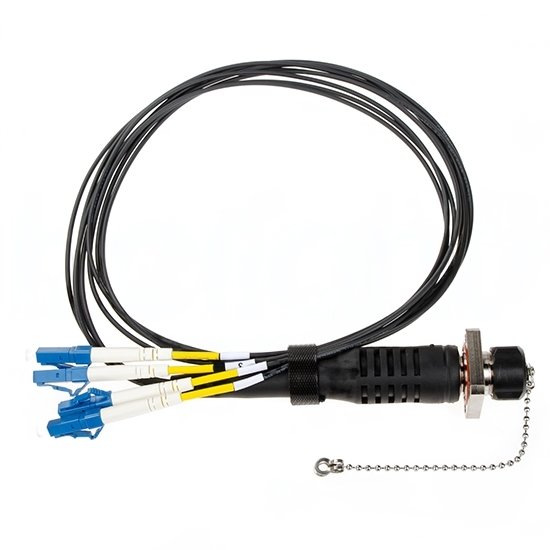
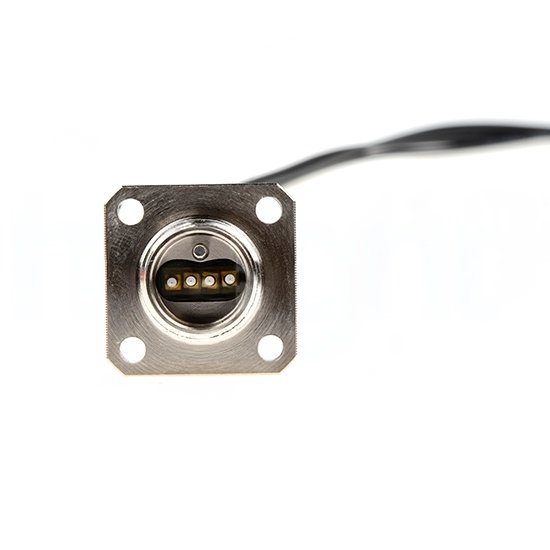
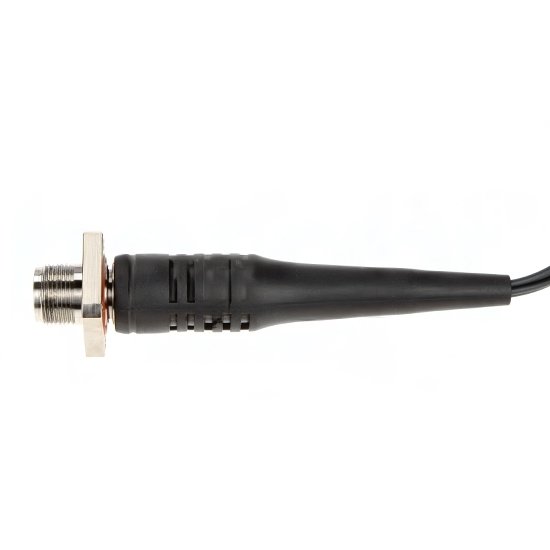
The Patchcord 4 Cores ODC Socket to LC Single-Mode Fanout φ2.0mm TPU is engineered for outdoor fiber networks requiring robust and efficient connectivity. With an ODC socket on one end and LC connectors on the other, this patch cord enables seamless integration with remote radio heads and distribution systems.
The TPU outer jacket ensures flexibility and long-term performance in harsh environmental conditions, while its low insertion loss and high return loss deliver optimal signal clarity. This patch cord is ideal for FTTA installations and other industrial applications requiring durable, high-performance cabling.
Engineering Suitability & Selection Boundaries
When This Product Is the Right Choice
FTTA deployments where ODC socket interfaces must be converted to multiple LC connections, such as linking RRHs to downstream equipment.
Outdoor installations requiring 4-core fanout structures to support separated signal paths or channel distribution from a sealed interface.
Industrial or infrastructure environments where rugged jackets and environmental resistance are necessary for long-term outdoor operation.
Applications involving optical sensing or outdoor monitoring, where stable fanout connectivity is required under harsh conditions.
When This Product May NOT Be Suitable
Indoor network environments where standard LC duplex or simplex patch cords can meet connectivity needs without interface conversion.
Deployments that do not utilize ODC socket interfaces, making fanout assemblies unnecessary.
High-density indoor cabling systems where compact routing and frequent re-patching are prioritized over sealed outdoor interfaces.
Common Selection Mistakes to Avoid
Treating an ODC socket to LC fanout cable as a generic LC patch cord, without accounting for interface conversion and sealing requirements.
Selecting a 4-core fanout structure without verifying actual channel and port allocation needs, leading to inefficient system design.
Overlooking transition planning between outdoor ODC interfaces and indoor LC equipment, which can complicate installation and maintenance.

- Durable and Flexible TPU Jacket
- Resistant to UV, chemicals, and environmental wear.
- Maintains flexibility even in extreme temperatures.
- High-Quality Optical Characteristics
- Low insertion loss ensures minimal signal degradation (≤0.3dB).
- High return loss (≥50dB) guarantees superior optical performance.
- Compact Fanout Structure
- Converts 4-core ODC connections into multiple LC terminations for diverse deployment needs.
- Ensures easy integration with indoor or outdoor distribution systems.
- Rugged ODC Connector Design
- Provides IP67-rated protection, ensuring dustproof and waterproof performance.
- Withstands high tensile forces and mechanical stress, making it ideal for outdoor deployments.
| Parameter | Specification |
| Connector Type | ODC Socket to LC |
| Fiber Mode | Single-Mode (SM) |
| Fiber Count | 4 cores |
| Polish | UPC |
| Cable Diameter | φ2.0mm |
| Jacket Material | TPU |
| Insertion Loss | ≤0.3dB |
| Return Loss | ≥50dB |
| Operating Temperature | -40°C to +85°C |
| Storage Temperature | -40°C to +85°C |
| Waterproof Rating | IP67 |
| Tensile Strength | Long Term: 200N; Short Term: 500N |

- FTTA Installations: Supports high-speed and stable connections between RRHs and base stations.
- Outdoor Data Networks: Rugged construction ensures reliable performance in extreme weather conditions.
- Industrial and Military Applications: Built for use in demanding environments such as oil fields and surveillance networks.
- Optical Distribution Systems: Fanout structure allows seamless connection to multiple LC interfaces.
Q1: What is the main application of an ODC to LC fanout patch cord?
It is primarily used in FTTA (Fiber to the Antenna) installations, connecting remote radio heads (RRHs) to base stations, as well as in other outdoor telecom and industrial environments.
Q2: Why is TPU used as the outer jacket material?
TPU offers excellent flexibility, abrasion resistance, and weather durability, making it ideal for outdoor and harsh environmental conditions compared with standard PVC or LSZH.
Q3: How many fibers does this patch cord support?
This version supports 4 cores, fanout to individual LC connectors, suitable for multi-channel or redundant fiber connections.
Q4: What optical performance can be expected?
The patch cord ensures low insertion loss and high return loss, maintaining stable signal transmission required in outdoor telecom networks.
Q5: Can the patch cord be customized?
Yes. Fiber length, connector type (LC/SC/ODC), jacket material, and labeling can all be customized to meet project requirements.
Q6: Is the patch cord suitable for single-mode and multimode applications?
This specific model is single-mode (SM) for long-distance and high-performance links. Multimode options may also be provided upon request.
Q7: What environments can this patch cord withstand?
With its TPU jacket and rugged ODC interface, it is designed for outdoor deployments, resistant to UV, moisture, and mechanical stress.
Q8: What is the typical delivery time?
Standard lengths are usually in stock, while customized configurations require approximately 5–10 working days depending on specifications.