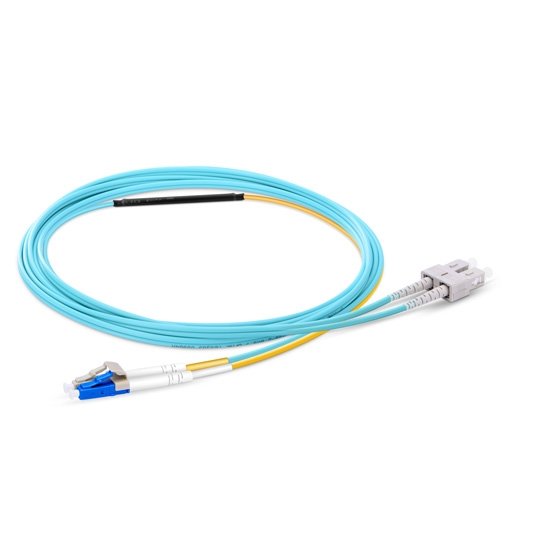
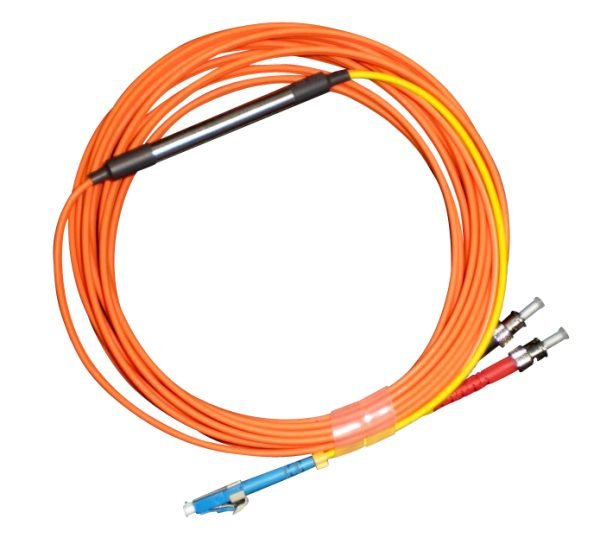
DESCRIPTION
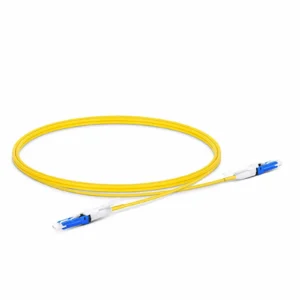
The SC/LC/FC/ST Mode Conditioning Fiber Optic Patch Cable is engineered for high-speed data transmission in multimode fiber networks. This cable mitigates DMD issues by integrating a single-mode fiber with a multimode system, enabling efficient and reliable communication for critical applications like Gigabit Ethernet and telecommunications.
Engineering Suitability & Selection Boundaries
When This Product Is the Right Choice
Typically used in legacy multimode networks where Gigabit Ethernet or higher-speed transceivers are deployed over OM1 or OM2 fibers that are susceptible to Differential Mode Delay (DMD).
Commonly selected when single-mode laser-based transceivers must operate over installed multimode infrastructure without replacing backbone cabling.
Suitable for scenarios where launch condition control is required to stabilize signal propagation and reduce modal dispersion effects.
Often applied in enterprise backbones, telecom central offices, or legacy data centers upgrading speeds while retaining existing multimode fiber links.
When This Product May NOT Be Suitable
May not be appropriate for OM3 or OM4 multimode systems designed for optimized laser launch, where mode conditioning is typically unnecessary.
Not typically selected for pure single-mode or pure multimode links where transmitter and fiber types are already correctly matched.
May be unsuitable for environments where bidirectional polarity or patching simplicity is required, as mode conditioning cables introduce directionality constraints.
Common Selection Mistakes to Avoid
Assuming mode conditioning patch cables are universally required for all multimode Gigabit or 10G links, regardless of fiber grade.
Installing the cable without verifying correct orientation, which can negate the DMD mitigation effect.
Using mode conditioning cables as a workaround for excessive link loss or poor fiber quality, rather than addressing the underlying infrastructure limitations.

- Mode Conditioning Design:
- Resolves DMD by introducing a segment of single-mode fiber to optimize signal quality in multimode fiber systems.
- Connector Versatility:
- SC to LC Mode Conditioning Fiber Optic Patch Cable – for Multimode Network Links
- Rugged and Durable Jackets:
- Flame-retardant and durable materials available in PVC (OFNR), LSZH, or Plenum (OFNP).
- Customizable Fiber Types:
- Supports OM1, OM2, OM3, and OM4 multimode fibers for versatile use.
| Connector Types | SC, LC, FC, ST |
| Fiber Type | Single Mode (SM) to Multimode (MM) |
| Polish Type | UPC/APC for SM, PC for MM |
| Insertion Loss | ≤0.3dB (SM to MM transition) |
| Return Loss | UPC ≥50dB, APC ≥60dB, MM PC ≥35dB |
| Cable Diameter | 2.0mm, 3.0mm |
| Jacket Material | PVC (OFNR), LSZH, Plenum (OFNP) |
| Operating Temperature | -40°C to +85°C |
| Durability | 500 Cycles |
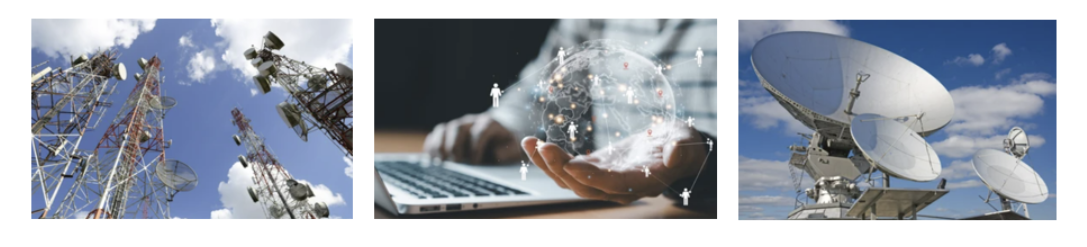
- Gigabit Ethernet Networks: Ensures minimal signal distortion and optimal network performance.
- Data Centers: Enhances airflow and space efficiency in high-density installations.
- Telecommunications: Offers high reliability for long-distance and high-speed telecom systems.
- CATV Networks: Ensures stable performance in broadcasting systems
- Flexible Design:
- Connector types and cable configurations can be customized for specific needs.
- Available in multiple fiber types and lengths.
- Plug-and-Play:
- Simple installation and compatibility with existing network setups.
Q1: What is the purpose of a mode conditioning fiber optic patch cable?
Mode conditioning cables introduce a short segment of single-mode fiber into multimode systems to eliminate Differential Mode Delay (DMD) and optimize signal quality.
Q2: Which connector types are available for these cables?
They are offered with SC, LC, FC, and ST connectors, all featuring high-precision zirconia ceramic ferrules for reliable and low-loss connections.
Q3: What fiber types are supported?
The cables support multimode fibers including OM1, OM2, OM3, and OM4, ensuring compatibility with a wide range of network applications.
Q4: What jacket materials are available?
Flame-retardant and durable jackets are available in PVC (OFNR), LSZH, or Plenum (OFNP), suitable for indoor, riser, or plenum-rated installations.
Q5: How do mode conditioning cables improve network performance?
By properly aligning single-mode launch within multimode fibers, they reduce signal distortion, lower insertion loss, and maintain high-speed, reliable data transmission.
Q6: Are these cables customizable?
Yes, customization options include fiber type, connector type, jacket material, and length to meet specific project or deployment requirements.
Q7: What applications are mode conditioning cables suitable for?
They are ideal for Gigabit Ethernet over multimode fibers, data centers, enterprise networks, and any environment requiring high-performance multimode transmission.
Q8: What is the typical delivery time for these cables?
Standard lengths are usually ready for shipment within 3–5 working days, while customized options typically require 5–10 working days.