DESCRIPTION
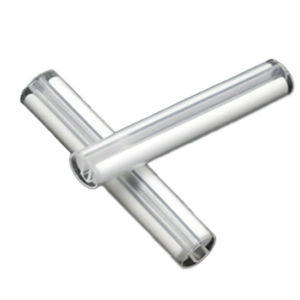
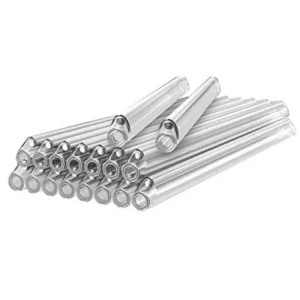
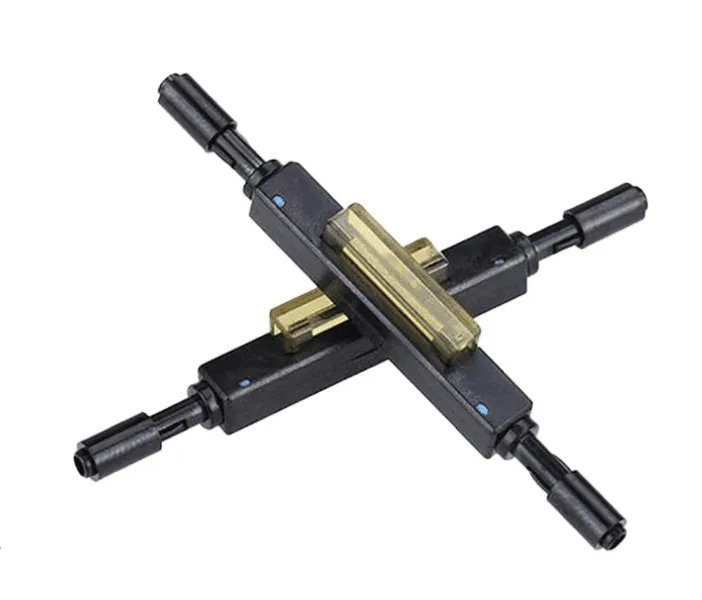
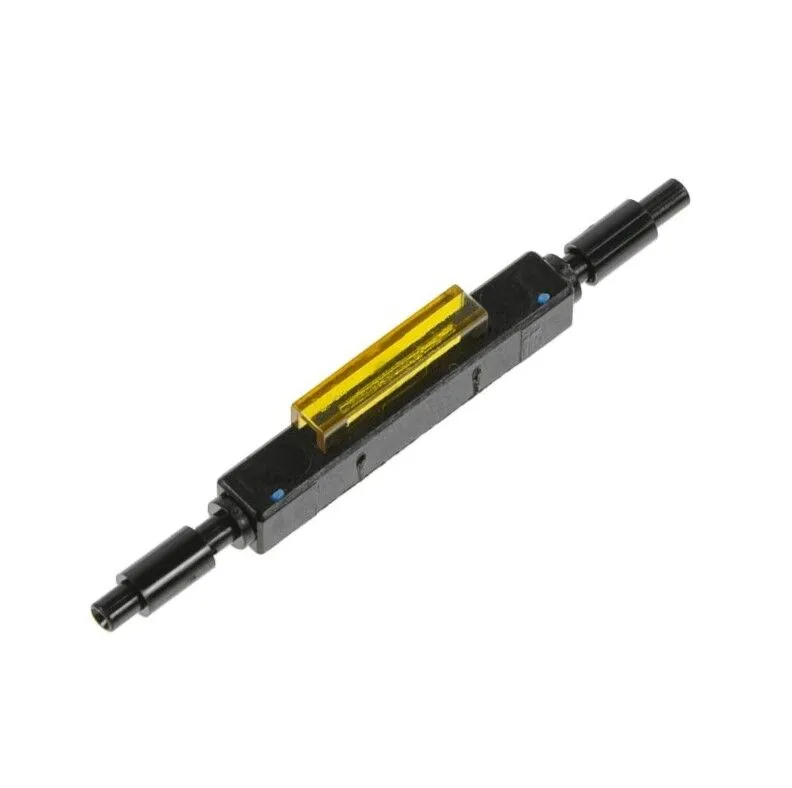
The Fiber Optic Mechanical Splicer is an innovative solution for mechanically connecting optical fibers with primary protection diameters of 250μm to 900μm. Using V-groove technology, it maintains physical contact between fibers, ensuring efficient data transmission. Its internal gel, with the same refractive index as glass, eliminates the need for fusion splicing. The simple loping lid design allows quick, tool-free installation, making it an ideal choice for cost-effective and reliable fiber connections.
Engineering Suitability & Selection Boundaries
- When This Product Is the Right Choice
- Typically selected for rapid, field-friendly fiber restoration when fusion splicing is not available and a mechanical, gel-assisted physical-contact joint can meet the link’s loss tolerance.
- Commonly suitable for emergency repair, temporary links, or quick upgrades where a fast installation cycle is needed and the fiber diameters match the supported 250μm–900μm primary protection range.
- Usually a good fit when technicians can maintain consistent fiber preparation practices (cleaning and controlled handling), since V-groove alignment performance commonly depends on end-face condition and contamination control.
- Typically appropriate when moderate insertion loss targets are acceptable for the application, and the workflow prioritizes speed and tool simplicity over fusion-style repeatability.
- When This Product May NOT Be Suitable
- May not be appropriate for links that require the lowest possible loss margin or highly repeatable performance across many joints, since mechanical alignment and gel contact typically show more variation than fusion splicing.
- May not be suitable when long-term stability under frequent handling or mechanical disturbance is expected, as clamp retention and joint condition can commonly change if the installation environment is not well controlled.
- May not be appropriate if the field process cannot ensure clean, well-prepared fiber ends, since contamination or inconsistent end conditions commonly increase loss and degrade connection reliability.
- Common Selection Mistakes to Avoid
- Commonly assuming “tool-free and fast” means end-face preparation is less important, when alignment and gel contact typically still depend on clean, properly handled fiber ends.
- Typically using the splice outside the intended fiber diameter condition (0.25mm/0.9mm handling mismatch), which commonly reduces holding stability and increases performance variation.
- Commonly treating the mechanical splice as a universal permanent substitute for fusion splicing in all networks, when it is typically chosen for speed and practicality under specific field constraints.
- Usually overlooking that repeatability is process-dependent, and mixing inconsistent technician practices commonly leads to fluctuating insertion loss and more rework during troubleshooting.
Feature Details
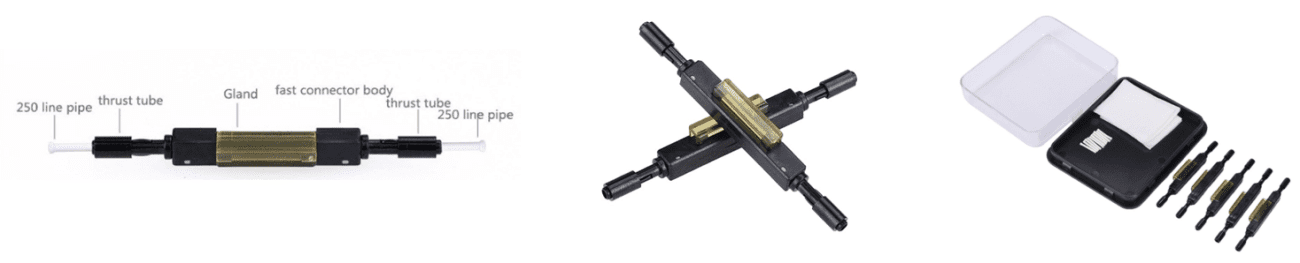
- Insertion and Reflection Performance: The mechanical splice ensures minimal signal loss with insertion loss ≤ 0.30dB and back reflection ≥ 45dB.
- Quick Installation: Installation is completed in approximately 10 seconds without the need for a fiber-cutting tool.
- High Strength: The splice secures the fibers with a holding force of >3N during locking and >10N after installation.
- Versatility: Compatible with various fiber types, including single-mode, multi-mode, and diverse cable diameters.
Product Specifications
| Item | Technical Parameters |
|---|---|
| Applicable for | 0.25mm/0.9mm fibers |
| Fiber Mode | Single-mode and Multi-mode |
| Average Insertion Loss | ≤ 0.30dB (1310nm & 1550nm) |
| Return Loss | ≥ 45dB |
| Holding Force (Lock) | > 3N |
| Holding Force (Complete) | > 10N |
| Operation Time | About 10s (no fiber cutting) |
| Working Temperature | -40℃ to +80℃ |
Application Details
This mechanical splicer is particularly suited for environments that require quick and cost-effective fiber terminations without compromising on performance. Its versatile design accommodates a wide range of cable types, making it an excellent choice for on-site installations, system upgrades, and repairs in indoor and outdoor settings.
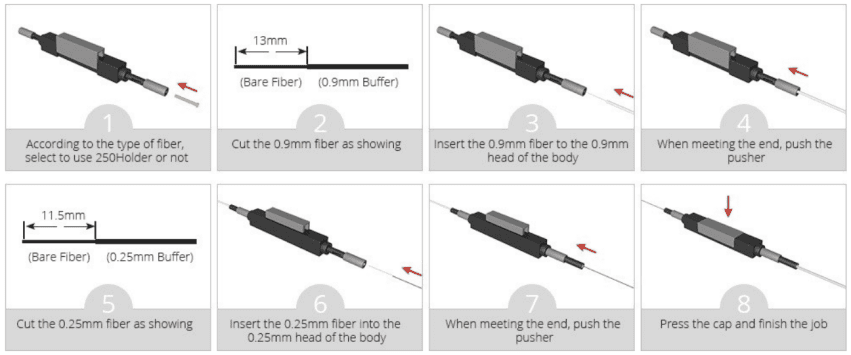
Operation Instructions
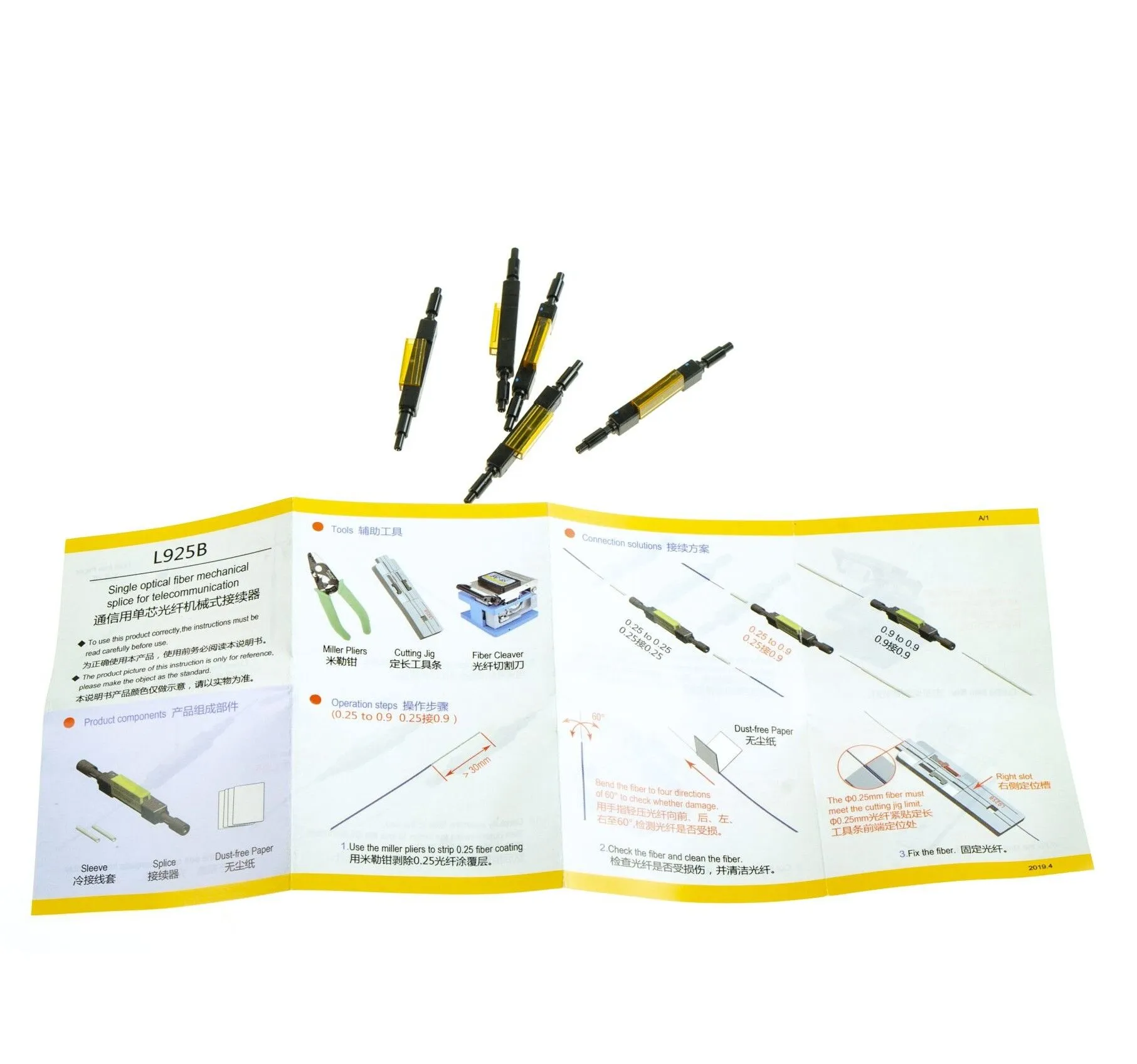
Related Tools:

- FTTH Drop Cable Stripper: Used for stripping 2×3mm bow-type drop cables.
- Fiber Cable Stripper: Designed for stripping 0.9mm, 2.0mm, or 3.0mm round cables and bare fibers in 2×3mm drop cables.
- Fiber Cleaver: Used for precise cutting of fibers and cables.
- Alcohol: Essential for cleaning fibers after cutting.
- Kimwipe: Used for final cleaning of fibers after alcohol cleaning.
FAQ
Q1: Does it require a fusion splicer?
No, provides fiber alignment mechanically.
Q2: Is insertion loss higher than fusion splicing?
Yes, typical IL around 0.1–0.3 dB, depending on quality.
Q3: Can it be used outdoors?
Yes, suitable for emergency field repairs.
Q4: What fibers does it support?
Single-mode and multimode.
Q5: Is it reusable?
Most mechanical splicers are single-use.
Q6: Does it require epoxy?
No, tool-free, no-adhesive design.
Q7: What applications is it used for?
FTTH drop cable splicing, restoration, temporary links.