
Table of Content
- Introduction
- What Are Fiber Transceivers?
- Converting Electrical Signals into Optical Signals
- Supporting High-Speed Data Transmission
- Meeting Growing Bandwidth Demands
- Achieving High-Density Network Design
- Optimized for Dense Environments
- Enhancing network reliability and stability
- Stable and Interference-free Transmission
- Supporting Flexible and Scalable Architecture
- Easy Network Upgrades
- Improving Energy Efficiency
- Reducing Power Consumption Per Bit
- Common Uses of Fiber Transceivers at Data Centers
- Switch-to-Switch Connections
- Server and Storage Connectivity
- Data Center Interconnection
- Choosing Reliable Fiber Optic Transceivers
- Compatibility and Quality are Crucial
- Conclusion
Introduction
Modern data centers are the backbone of cloud computing, big data, artificial intelligence workloads, and enterprise digital services. With increasing data amounts and applications requiring more bandwidth and lower latency, the physical network infrastructure must constantly evolve to keep pace.
At the heart of this infrastructure are fiber transceivers. These small yet crucial components enable high-speed data transmission through optical fibers, connecting switches, servers, and storage devices in data centers. Without reliable fiber transceivers, modern data centers simply could not operate at the scale and performance levels required today.
In this article, we’ll discuss why fiber transceivers have become so essential to modern data centers and how they support data center performance, scalability, and operational efficiency.
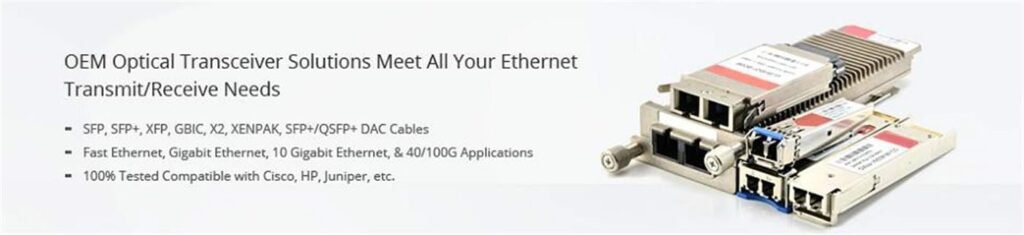
What Are Fiber Transceivers?
Converting Electrical Signals into Optical Signals
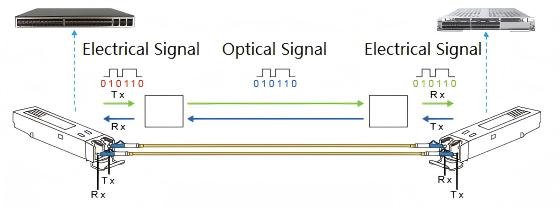
A fiber transceiver is a device that converts electrical signals from network devices into optical signals and transmits them through a fiber optic cable and then converts the optical signals back into electrical signals at the receiving end.
Fiber optic transceivers are commonly used in the following devices:
● Network switches
● Routers
● Servers
● Storage and interconnect solutions
They form the interface between active network equipment and passive fiber optic cabling.
Supporting High-Speed Data Transmission
Meeting Growing Bandwidth Demands
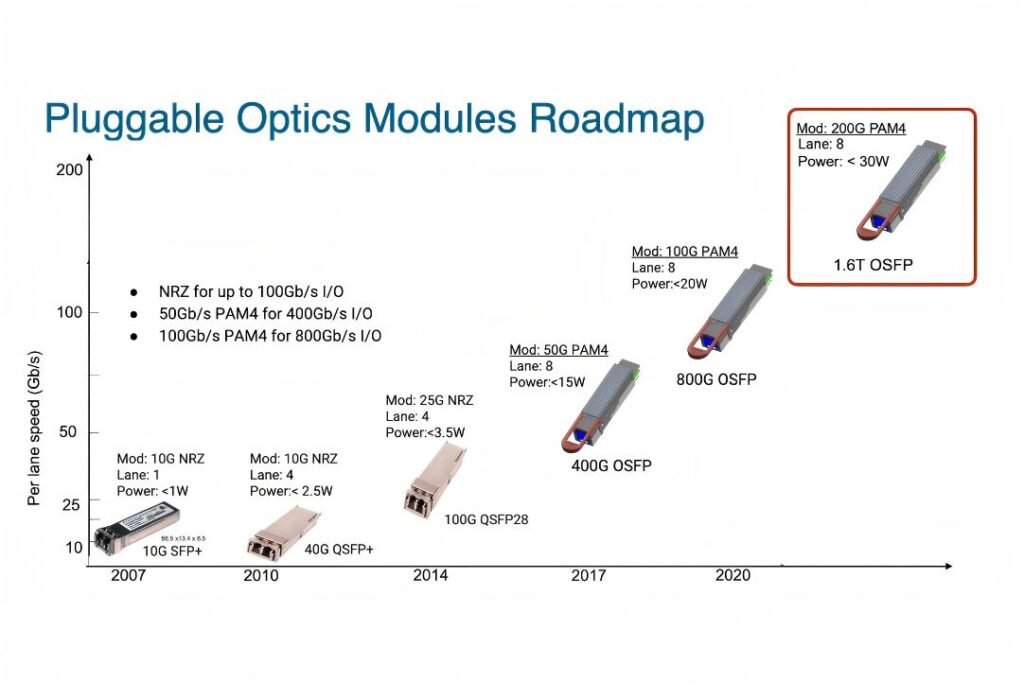
Data centers must handle massive amounts of east-west traffic between servers, as well as north-south traffic between the user and the application server. Fiber transceivers support high-speed connections that are difficult or impractical to achieve with copper cabling.
Key advantages include:
● Support for high data rates
● Stable and reliable long-distance transmission
● Low signal attenuation
As speeds in data centers continue to increase, fiber optic transceivers provide the necessary performance foundation for scalable network architectures.
Achieving High-Density Network Design
Optimized for Dense Environments
Modern data centers prioritize space efficiency. The transceivers are designed to be small and support high port density on switches and servers, enabling more connections within limited rack space.
This enables data center operators to:
● Increase network capacity without expanding the physical footprint
● Enhance airflow and cable management
● Reduce congestion within racks and cabinets
High-density design is crucial for efficient data center operations.
Enhancing network reliability and stability
Stable and Interference-free Transmission
Unlike copper cable connections, fiber optics are immune to electromagnetic interference. Fiber transceivers fully utilize this advantage, providing stable and consistent signal quality even in environments with severe electromagnetic interference.
Reliable fiber transceivers help reduce:
● Data packet loss
● Signal degradation
● Unexpected network outages
This reliability is crucial for mission-critical applications and uninterrupted service.
Supporting Flexible and Scalable Architecture
Easy Network Upgrades
Fiber optic transceivers makes it possible for data centers to upgrade the speed of the networks by replacing transceiver modules instead of replacing the entire cabling system. This modular approach offers the following advantages:
● Greater flexibility
● Lower upgrade costs
● Shorter downtime during expansion
It enables data centers to quickly adapt to new technologies and growing demands.
Improving Energy Efficiency
Reducing Power Consumption Per Bit
Compared to many traditional solutions, modern fiber transceivers are designed with greater emphasis on energy efficiency. By transmitting large amounts of data with lower power consumption per bit, they help reduce overall energy consumption.
This helps to:
● Reduce operating costs
● Reduce heat generation
● Improve sustainability
Energy efficiency is an increasingly important factor in the design of large data centers.
Common Uses of Fiber Transceivers at Data Centers
Switch-to-Switch Connections
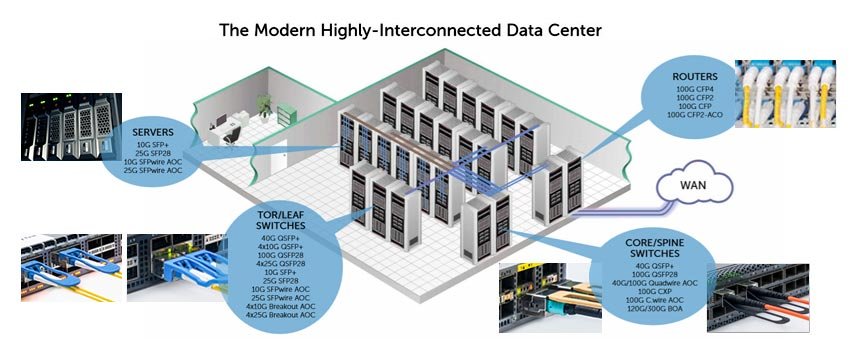
Fiber transceivers are widely used to connect switches in the access layer, aggregation layer, and core layer of data center networks.
Server and Storage Connectivity
They also enable high-speed connections between servers, storage systems, and network infrastructure, supporting rapid data access and processing.
Data Center Interconnection
For connections between different data centers, fiber transceivers offer reliable long-distance optical transmission.
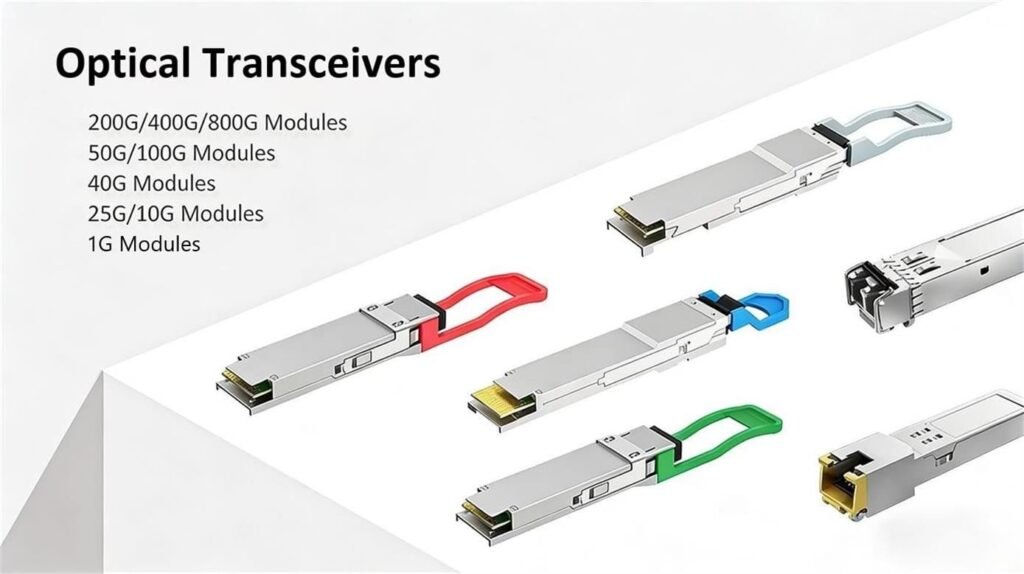
Choosing Reliable Fiber Optic Transceivers
Compatibility and Quality are Crucial
Not all fiber transceivers perform the same. Compatibility with network equipment, stable performance, and comprehensive testing are all key selection factors.
Experienced suppliers such as Fibermart offer tested fiber transceivers that undergo performance and compatibility testing, helping data center operators confidently deploy reliable networks.
Conclusion
Fiber transceivers are a vital component of modern data centers, enabling high-speed transmission, high-density design, reliable performance, and scalable network architectures. They are the crucial link connecting network equipment and fiber optic infrastructure.
By choosing high-quality fiber transceivers from trusted suppliers like Op2Link, data center operators can build networks that meet current performance demands while also offering the flexibility and cost-effectiveness to accommodate future growth. We look forward to collaborating with you.