DESCRIPTION
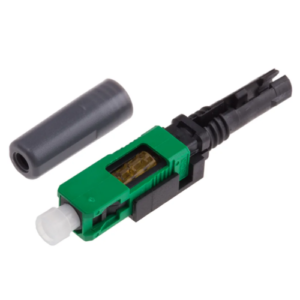
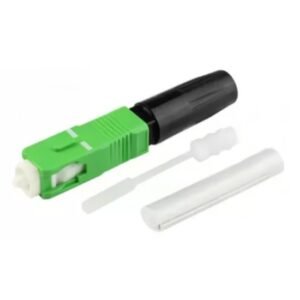
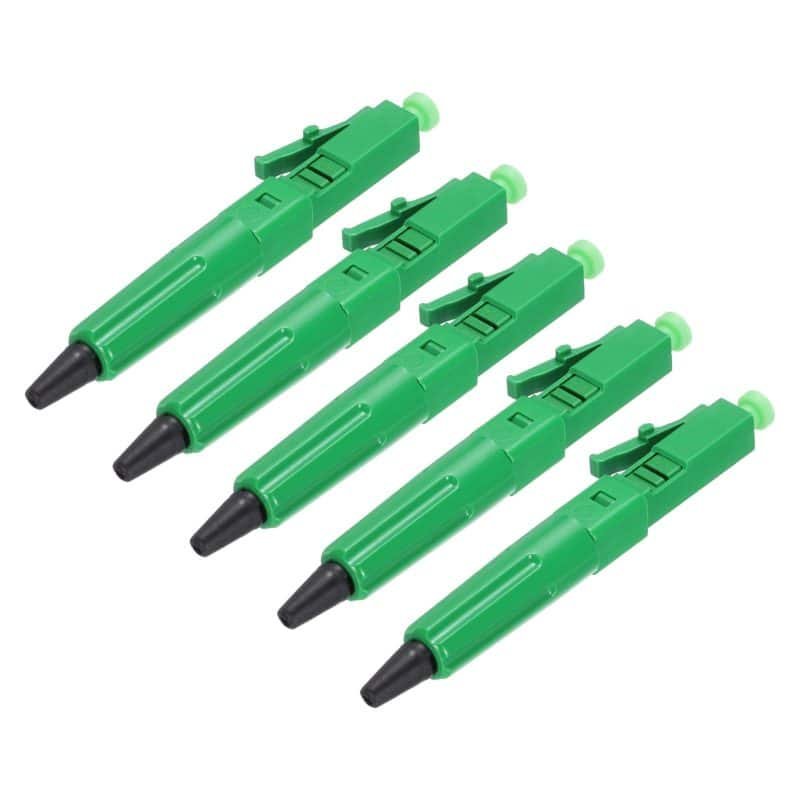
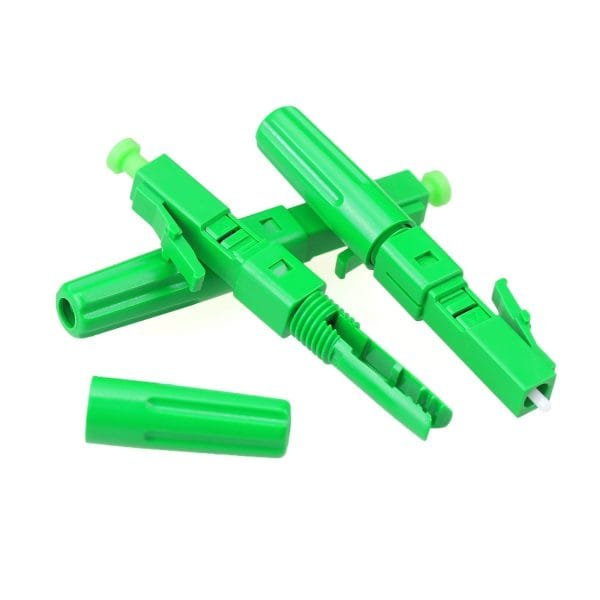
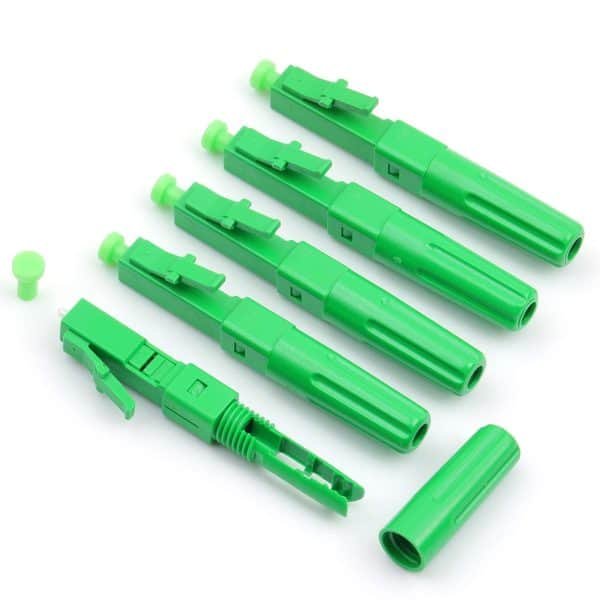
The HOLIGHT LC/APC Field Assembly Fast Connector Series provides reliable and high-performance solutions for FTTH and field fiber terminations requiring APC (Angled Physical Contact) polish.
This series includes two housing options — Universal Type for round indoor cables and Drop Cable Type for flat FTTH cables.
Both utilize pre-polished angled ferrules, ensuring quick, epoxy-free field termination with excellent return loss (≥50 dB) and insertion loss (≤0.3 dB).
Engineered for telecom-grade networks, LC/APC connectors are ideal for high-bandwidth and reflection-sensitive applications such as FTTH, FTTA, CATV, and optical distribution systems.
Engineering Suitability & Selection Boundaries
- When This Product Is the Right Choice
- Typically selected for FTTH last-mile terminations where APC (8°) return-loss control is required and the installer needs fast, epoxy-free field assembly.
- Commonly used when the cable type is clearly matched to the correct housing: Universal Type for 0.9/2.0/3.0 mm round cables and Drop Cable Type for 2×3 mm / 2×5 mm flat drop cables.
- Usually appropriate for reflection-sensitive access links (FTTH/FTTA/CATV) where consistent RL ≥50 dB is needed without sending cables back for factory termination.
- Typically suitable for maintenance teams that expect re-termination/rework on site and need repeatable assembly in controlled steps (strip, cleave, insert, lock).
- When This Product May NOT Be Suitable
- May not be suitable if the project cannot keep a consistent APC ecosystem end-to-end, since mixing APC and UPC conventions commonly causes commissioning rework.
- Commonly unsuitable when field conditions make cleave quality and cleanliness hard to control, as mechanical field-assembly connectors are typically more technique-sensitive than fusion-spliced pigtails.
- May not be appropriate when the installed cable geometry does not match the chosen type (round vs flat drop sizes), because strain retention and long-term stability depend on correct clamp fit.
- Typically not suitable for locations exposed beyond a protected terminal/box workflow without additional environmental protection, since sealing is determined by the enclosure, not the connector itself.
- Common Selection Mistakes to Avoid
- Selecting APC vs UPC by color only without enforcing a strict polish rule across the link segment, which commonly leads to wrong-interface mating during turn-up.
- Using the Universal Type on flat drop cables (or the Drop Cable Type on non-matching drop sizes), which commonly causes weak retention and intermittent loss under movement.
Treating “fast connector” as plug-and-play while neglecting strip length, cleave angle, and fiber cleaning, which commonly drives IL/RL variation and failed acceptance tests.
Feature Details

- 8° Angled APC Polish Design
Provides enhanced return loss ≥50 dB and minimizes back reflection — essential for high-precision FTTH and FTTA networks. - Dual Structural Options
- Universal Type: Compatible with round indoor cables and standard patch cords.
- Drop Cable Type: Built for 2×3 mm and 2×5 mm FTTH drop cables with secure mechanical retention.
- High-Precision Ceramic Ferrule
Guarantees stable insertion loss ≤0.3 dB with excellent repeatability after multiple mating cycles. - Quick Field Termination
No epoxy or curing needed; mechanical alignment ensures perfect core positioning for low optical loss. - Rugged Design & Easy Operation
Both connectors feature reinforced locking bodies, strain relief boots, and visual assembly indicators. - Long-Term Reliability
Withstands temperature fluctuations, vibration, and repeated installation in field conditions.
Product Specifications
| Parameter | Universal Type | Drop Cable Type |
| Connector Type | LC/APC Field Assembly | LC/APC Field Assembly |
| Polish Type | APC (8° Angled Endface) | APC (8° Angled Endface) |
| Cable Compatibility | 0.9 / 2.0 / 3.0 mm round cable | 2.0×3.0 mm, 2.0×5.0 mm flat drop cable |
| Ferrule Material | Ceramic | Ceramic |
| Fiber Type | Single Mode (SM) | Single Mode (SM) |
| Insertion Loss | ≤ 0.3 dB | ≤ 0.3 dB |
| Return Loss | ≥ 50 dB | ≥ 50 dB |
| Repeatability | ≤ 0.1 dB | ≤ 0.1 dB |
| Durability | ≥ 500 mating cycles | ≥ 500 mating cycles |
| Operating Temperature | –20℃ ~ +75℃ | –20℃ ~ +75℃ |
| Storage Temperature | –40℃ ~ +85℃ | –40℃ ~ +85℃ |
| Applicable Fiber | G.657A / G.652D | G.657A / G.652D |
| Installation Time | < 2 minutes | < 2 minutes |
| Color | Green (APC) | Green (APC) |
Application Details

- FTTH Networks – Drop cable type for final user termination at optical outlets or wall boxes.
- Telecom Infrastructure – Universal type for ODF, ONU, and terminal cabinet assembly.
- 5G/FTTA Base Stations – Low-reflection APC polish ensures link stability in radio systems.
- CATV and CCTV Systems – Provides clear signal transmission with minimal reflection noise.
- Field Restoration & Maintenance – Reusable connectors for quick, epoxy-free termination.
FAQ
Q1: What makes APC connectors different from UPC connectors?
APC connectors use an 8° angled end face, which provides higher return loss of ≥50 dB and improved reflection control compared with UPC connectors.
Q2: What is the difference between Universal and Drop Cable types?
The Universal type is designed for round indoor cables. The Drop Cable type is optimized for flat FTTH drop cables used in access networks.
Q3: Are polishing or glue required during installation?
No. These are mechanical field-assembly connectors and do not require epoxy, curing, or polishing tools.
Q4: How can APC and UPC connectors be visually identified?
APC connectors are typically identified by green housings, while UPC connectors use blue housings.
Q5: Are these connectors reusable?
Yes. They can be reassembled multiple times, making them suitable for field termination, testing, and rework.
Q6: What fiber types are supported?
They support single-mode fibers such as G.657A and G.652D, commonly used in FTTH and access networks.
Q7: What optical performance can be expected?
Typical insertion loss is ≤0.3 dB, and return loss is ≥50 dB under standard test conditions.
Q8: What applications are these connectors recommended for?
They are widely used in FTTH, FTTA, CATV systems, data networks, and on-site field termination projects.