
Table of Content
- What is AWG (American Wire Gauge) Cable Gauge?
- What is Ethernet Cable’s Category and Gauge?
- How Does Wire Gauge Affect Ethernet Cable Performance?
- How to Choose Ethernet Cables for Different Specifications?
- Final Thoughts on Copper Ethernet Cable Infrastructure
- Professional Ethernet Cabling Solutions: Fibermart
- Frequently Asked Questions FAQs
- What size is American Wire Gauge AWG?
- What is the AWG in the US?
- How do I know what AWG wire to use?
- What is the AWG American Wire Gauge rating expressed in?
- What is the formula for AWG gauge?
- How to choose the correct wire size?
AWG is more than just a number printed on a cable; it’s a technical code that determines network performance, reliability, and future upgrade capability. Behind this seemingly simple number lie critical parameters such as current capacity, signal attenuation, and transmission distance.
What is AWG (American Wire Gauge) Cable Gauge?
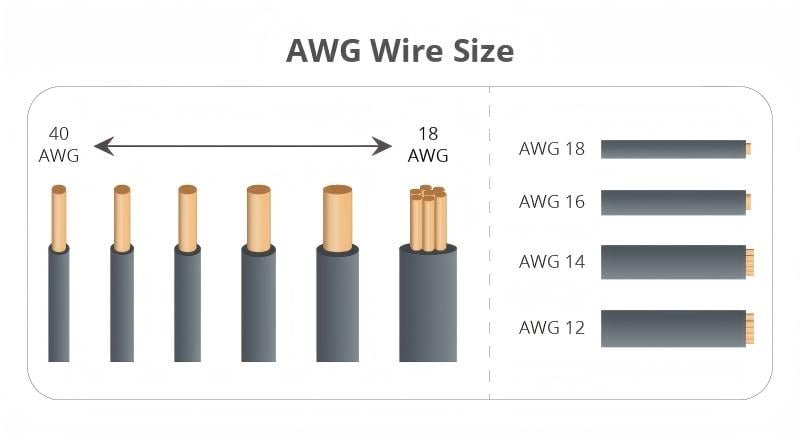
AWG (American Wire Gauge) is a standardized system for differentiating wire diameters, established in the United States in 1857. In this system, a smaller number indicates a thicker wire with greater current-carrying capacity; conversely, a larger number indicates a thinner wire with less current-carrying capacity.
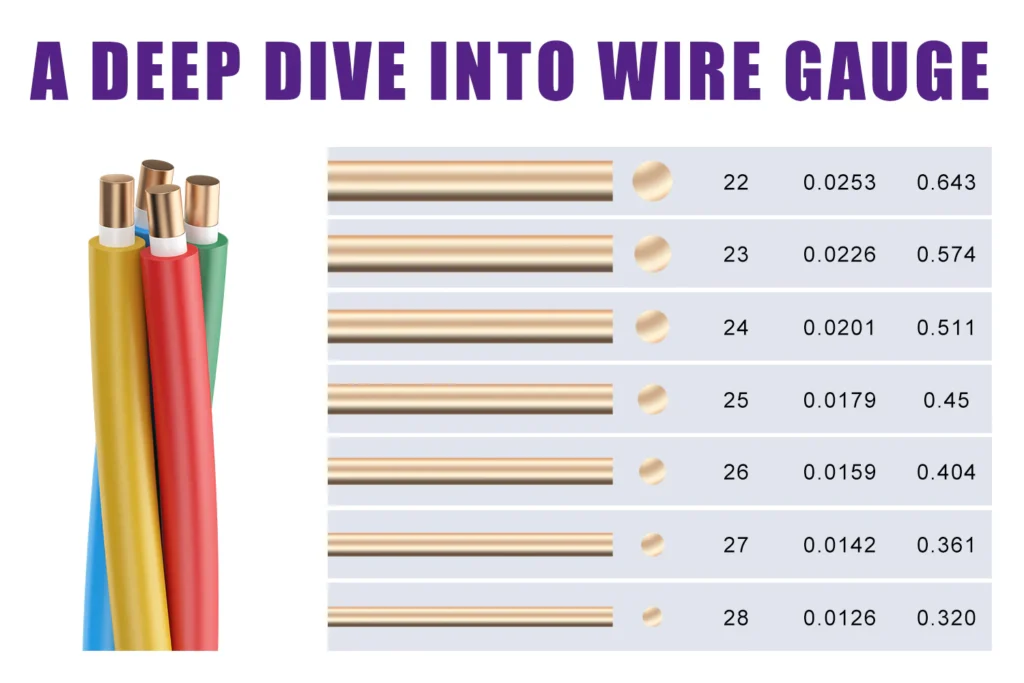
This “reverse” logic originates from historical manufacturing methods—each drawing pass during early wire production increased the gauge number, with the wire rod starting at 0 gauge. More passes resulted in a thinner wire. Below are the diameters corresponding to common Ethernet cable AWG values:
| AWG Value | Diameter (mm) | Diameter (inches) |
|---|---|---|
| 22 AWG | 0.644 | 0.0253 |
| 23 AWG | 0.573 | 0.0226 |
| 24 AWG | 0.511 | 0.0201 |
| 26 AWG | 0.405 | 0.0159 |
| 28 AWG | 0.321 | 0.0126 |
For twisted-pair cables like Ethernet, the AWG value is determined by the total cross-sectional area of all conductors. Therefore, a twisted-pair cable with a given AWG value will always have a slightly larger overall diameter than a single solid wire of the same AWG.
What is Ethernet Cable’s Category and Gauge?
Ethernet cable “specifications” typically involve two dimensions: Category and Gauge. The Category (e.g., Cat5e, Cat6) primarily defines the cable’s data transmission capabilities, while the Gauge directly affects its physical characteristics and transmission efficiency.
The most common Ethernet wire gauges include 28 AWG, 26 AWG, 24 AWG, 23 AWG, and 22 AWG. Ethernet cables of different gauges have their own application scenarios:
● 28 AWG Cable: With a diameter of only about 0.321 mm, it is very thin and flexible, ideal for short-distance runs (up to ~30 meters) and space-constrained environments.
● 26 AWG Cable: With a diameter of about 0.404 mm, it strikes a balance between flexibility and performance, suitable for runs under 50 meters.
● 24 AWG Cable: With a diameter of about 0.511 mm, it is the most common standard gauge, suitable for most home and small office networks, with transmission distances up to 100 meters.
● 23 AWG Cable: With a diameter of about 0.573 mm, it offers improved signal integrity, suitable for enterprise-level deployments, with transmission distances up to 120 meters.
● 22 AWG Cable: With a diameter of about 0.644 mm, it provides excellent signal integrity, suitable for data centers and high-performance environments, with transmission distances up to 150 meters.
How Does Wire Gauge Affect Ethernet Cable Performance?
Wire gauge impacts Ethernet cable performance primarily in three areas: signal integrity, transmission distance, and interference resistance.
Signal attenuation is the main mechanism through which gauge affects network performance. The resistance of a wire is inversely proportional to its cross-sectional area. Therefore, thinner wires (higher AWG numbers) have higher resistance, causing signals to attenuate more severely during transmission. This attenuation is particularly noticeable over long distances and can lead to packet loss and reduced network speeds.
Current-carrying capacity directly impacts the cable’s power transmission capability. While data signals themselves require very little current, gauge becomes crucial in PoE (Power over Ethernet) applications. Thicker wires (lower AWG values) can deliver more power without generating excessive heat, which is vital for devices like IP phones, wireless access points, and surveillance cameras.
Interference resistance is also closely related to wire gauge. Thicker wires not only have lower resistance but are often paired with thicker insulation and shielding, providing better protection against electromagnetic interference (EMI) and radio frequency interference (RFI). This is especially important in industrial settings or when cables run near power lines.
How to Choose Ethernet Cables for Different Specifications?
Choosing the right Ethernet cable requires a comprehensive consideration of factors such as application scenario, transmission distance, performance requirements, and budget.
Selection Strategy Based on Application Scenario:
● Home Networks & Small Offices: 24 AWG Cat5e or Cat6 cables are usually sufficient and cost-effective.
● Enterprise-Level Deployment: Consider 23 AWG or 22 AWG Cat6 or Cat6A cables to ensure stability over long distances.
● Data Centers & High-Performance Environments: 22 AWG Cat6A or Cat8 cables are ideal choices.
● Space-Constrained Environments (e.g., inside server racks): 28 AWG or 26 AWG slim cables offer better flexibility.
Distance Considerations: The standard maximum length for Ethernet cable is 100 meters, but the actual effective distance is significantly influenced by wire gauge.
● For connections over 50 meters, avoid using 28 AWG cables.
● For connections at or near the 100-meter standard, choose 23 AWG or 22 AWG cables for optimal performance.
Future Compatibility Considerations:
● If planning an upgrade to higher-speed networks (like 10GbE), choose Cat6A over Cat6, even if such speed isn’t currently needed.
● For PoE device deployment, choose 23 AWG or thicker cables to ensure adequate power delivery.
● Consider shielded cables (STP/FTP) if significant electromagnetic interference is present in the environment.
Installation Notes: Proper installation is equally important. Avoid bending copper cables beyond their recommended bend radius (typically a minimum of 4 times the cable diameter) to prevent damaging the internal conductors. Apply force evenly during pulling to avoid deforming the twisted-pair structure. During termination, try to keep the twist intact; untwisting should not exceed 0.5 inches (approx. 1.27 cm).
Final Thoughts on Copper Ethernet Cable Infrastructure
Copper cabling still holds a significant place in network infrastructure, but high-quality cable and professional installation are equally important. Even with the correct cable specifications, improper installation can lead to performance degradation and reduced lifespan.
In special environments, such as outdoor or direct-burial applications, specially designed cables are required. These cables typically feature water-resistant, UV-resistant outer jackets and may contain gel filling to prevent moisture ingress. For such applications, while choosing the appropriate AWG, attention must also be paid to the cable’s jacket material and shielding type.
With the advancement of network technology, fiber optics are gradually replacing copper in some applications, especially for long-distance, high-speed transmission. However, for most local area network applications, copper remains a practical choice due to its cost-effectiveness, compatibility, and PoE capabilities.
Professional Ethernet Cabling Solutions: Fibermart
The reliability and performance of a network cabling system depend not only on correct specification selection but also on high-quality products. The Op2Link Online Store offers a wide range of network cabling solutions to meet various needs, from homes to data centers.
Whether you need standard 24 AWG Cat6 cable or high-performance 22 AWG Cat6A shielded cable, Op2Link provides multiple options. Our product offerings include:
● Various types of Ethernet cables (UTP, STP, FTP)
● Jacket types for different environments (CMR, CMP, Outdoor-rated)
● Complete cabling accessories and tools
● Professional technical support and customization services
Choosing the correct AWG specification is a crucial step for successful Ethernet deployment. By understanding how wire gauge affects cable performance and comprehensively considering application needs, distance limitations, and environmental factors, you can build a stable, efficient, and future-ready network infrastructure. When you’re ready to implement your network cabling project, visit the Fibermart Online Store for high-quality cabling products and professional advice.
The foundation of the networked world often lies hidden within those seemingly ordinary cables, and a deep understanding of the AWG number is the first step in building a reliable network.
Frequently Asked Questions FAQs
You may have questions about American Wire Gauge (AWG) and how to select the right wire for your needs. This section addresses common inquiries regarding wire sizes, ratings, and how to choose the correct gauge for different applications.
What size is American Wire Gauge AWG?
AWG sizes range from 0000 (4/0) for very large wires to 40 for very small wires. Each size has a specific diameter measured in millimeters (mm) and inches. For example, 1 AWG wire has a diameter of about 7.348 mm.
What is the AWG in the US?
AWG stands for American Wire Gauge. It is a standardized system used in the United States to measure the thickness of electrical wires. The system determines wire sizes based on a numerical scale, where a smaller number means a thicker wire.
How do I know what AWG wire to use?
To choose the right AWG wire, consider the electrical load and the distance from the power source. You can consult charts that show the ampacity of different wire gauges. This will help you determine the correct size to safely carry the electrical current.
What is the AWG American Wire Gauge rating expressed in?
The AWG rating is expressed in American Wire Gauge numbers. Each number corresponds to a specific wire diameter and ampacity. This allows users to find the appropriate wire for various applications based on its size and current handling capability.
What is the formula for AWG gauge?
The formula for converting wire diameter to AWG is based on a logarithmic scale. Each step in the AWG system represents a change of about 20% in cross-sectional area. To convert diameter to AWG, you would typically use reference tables rather than a simple formula.
How to choose the correct wire size?
To pick the right wire size, start by identifying the electrical load requirements and the wiring distance. Use AWG charts to find the appropriate gauge that can safely carry the load without overheating. Also, consider any relevant safety regulations for your specific application.